Legal paperwork has always had a reputation for being intimidating. One glance at a multi-page agreement filled with dense legal terms can make anyone feel overwhelmed. Whether you are a startup founder trying to draft a client agreement, a freelancer sending a contract, or an individual preparing a rental agreement, documentation often feels like a maze with hidden traps. That is exactly where legal templates have transformed the modern workflow. Instead of spending thousands on repetitive legal drafting or wasting hours building documents from scratch, people now rely on ready-made, customizable templates that simplify everything.
Table of Contents
ToggleWhat Are Legal Templates?
ground up each time, you start with a proven structure and customize it to fit your needs. Legal templates work exactly the same way. They are pre-designed legal documents created by professionals to cover common agreements, contracts, and forms. Users simply edit names, dates, payment terms, responsibilities, and other details to create a legally usable document within minutes.
These templates are available for nearly every purpose imaginable.Individuals use them for wills, rental agreements, loan agreements, and personal affidavits. The beauty lies in their simplicity. You do not need to be a lawyer to understand the framework because modern legal template platforms are increasingly designed with plain language and guided customization.
Why They Have Become Popular
The explosion of remote work, freelancing, online businesses, and digital transactions has fueled the popularity of legal templates. Businesses are now operating faster than ever before. Deals are signed online, clients are onboarded digitally, and partnerships often begin across countries without face-to-face meetings. Traditional legal drafting simply cannot keep pace with this speed.
Another major factor is cost efficiency. Hiring a lawyer for every routine agreement can become financially exhausting, especially for small businesses and solopreneurs. Legal templates offer a middle ground. They provide professionally structured documents without the heavy legal fees attached to custom drafting. According to industry data, businesses using digital documentation systems and e-signatures save significant operational costs while improving workflow speed.
Traditional Legal Drafting vs Modern Templates
There was a time when every legal document was handcrafted like a luxury watch. Lawyers manually drafted contracts line by line, reviewed every clause individually, and stored physical copies in massive filing cabinets. While this approach still matters for complex legal matters, it created enormous delays for routine documentation. Businesses often waited days or weeks just to finalize a simple agreement.

The Role of Digital Transformation
Technology has completely reshaped how documentation works. Today, cloud-based legal platforms allow users to generate contracts instantly, edit them online, share them with multiple stakeholders, and collect signatures from anywhere in the world. That level of convenience would have sounded futuristic twenty years ago.
Digital transformation also improved document security and tracking. Businesses can now monitor who opened a document, when it was signed, and what changes were made. Audit trails create transparency that traditional paperwork often lacked. Platforms integrated with e-signatures have made contracts not only faster but also more reliable.
Time-Saving Advantages
Time is the currency of modern business. Every unnecessary delay costs money, opportunities, and productivity. Legal templates dramatically reduce the time spent creating routine documents. Instead of waiting for legal review on every small agreement, teams can use approved templates immediately.
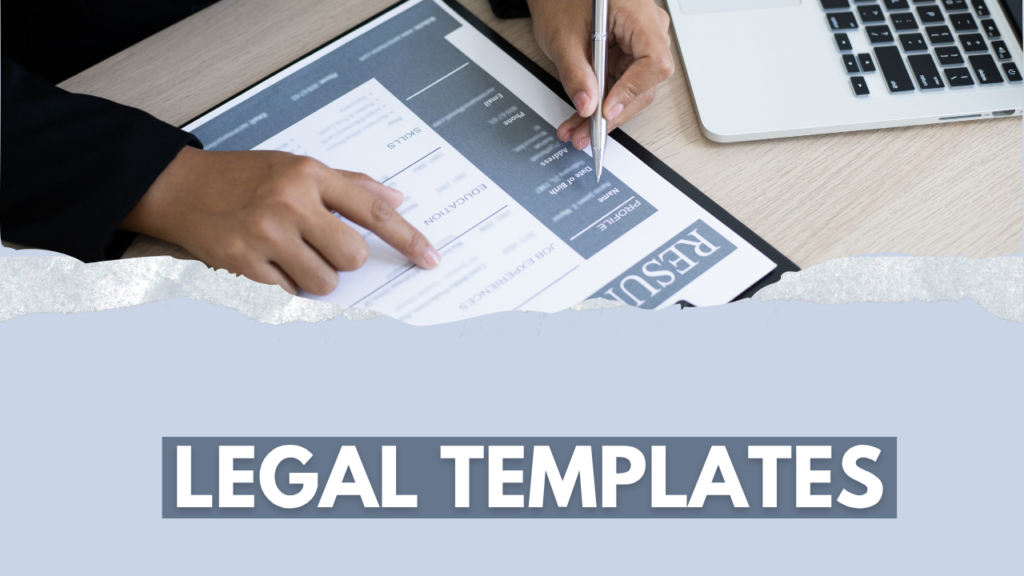
How Individuals Benefit from Legal Templates
Simplifying Personal Agreements
Legal documentation is not only for corporations and law firms. Ordinary people deal with agreements constantly, often without realizing how important proper documentation can be. From lending money to a friend to renting a property or writing a will, legal clarity matters in everyday life.
Legal templates simplify these situations tremendously. Instead of relying on verbal promises, individuals can create clear written agreements quickly. This protects relationships because expectations become transparent from the beginning. It is similar to setting ground rules before starting a game. Everyone understands the boundaries and responsibilities.
Easy Access to Legal Protection
One of the biggest advantages of legal templates is democratization. Legal protection is no longer limited to those with large budgets. Affordable templates allow individuals to document important arrangements without expensive consultations for every routine need.
This accessibility becomes especially important in the digital economy. Freelancers, creators, consultants, and remote workers regularly interact with clients across regions. A proper contract protects payment terms, ownership rights, confidentiality, and deadlines. Without documentation, misunderstandings become far more likely.
Common Types of Legal Templates
Business Contracts
Business contracts are among the most widely used legal templates. Service agreements, partnership contracts, sales agreements, and non-disclosure agreements are essential for daily operations.
Employment Agreements
Hiring employees involves multiple legal responsibilities. By standardizing terminology pertaining to pay, benefits, confidentiality, and workplace norms, employment templates streamline the onboarding process. Companies save time while ensuring compliance consistency.
Rental and Lease Documents
Landlords and tenants both benefit from clear lease agreements. Templates define rent amounts, maintenance responsibilities, security deposits, and occupancy rules. Clear documentation reduces disputes and improves accountability.
Personal Legal Forms
Personal templates include wills, loan agreements, affidavits, power of attorney forms, and family-related agreements. These documents help individuals formalize important decisions without excessive complexity.
Template Type | Common Users | Main Benefit |
Service Agreement | Freelancers & Agencies | Defines project terms |
NDA | Businesses & Startups | Protects confidential information |
Employment Contract | HR Departments | Standardizes hiring |
Rental Agreement | Landlords & Tenants | Clarifies property rules |
Will Template | Families & Individuals | Organizes estate planning |
E-Signatures and Automation
Technology has turned legal documentation into a seamless digital experience. E-signatures allow agreements to be signed instantly from laptops or smartphones. Businesses no longer depend on printing, scanning, or courier services to finalize deals.
Cloud Storage and Accessibility
Teams working remotely can collaborate on contracts in real time. Individuals can retrieve agreements instantly without searching through physical folders.
Accessibility also improves disaster recovery. Physical paperwork can be lost, damaged, or misplaced. Cloud-based systems create backups and maintain document histories securely. Businesses gain operational resilience, while individuals gain peace of mind knowing important agreements remain safely stored online.
When Templates May Not Be Enough
Despite their advantages, legal templates are not magical solutions for every situation. Complex disputes, international transactions, mergers, intellectual property conflicts, and highly regulated industries often require professional legal expertise. Templates work best for standard situations with predictable structures.
A generic agreement may fail to comply with local laws or industry regulations. It is similar to wearing shoes that almost fit. They may work for a short walk, but long-term use creates discomfort and complications.
Importance of Legal Review
Professional legal review still matters, especially for high-value or sensitive agreements. Many businesses adopt a hybrid approach. They use templates for efficiency but involve lawyers for customization, risk assessment, or compliance checks.
This balance often works best. Templates handle routine structure, while lawyers focus on strategic legal guidance. Think of templates as autopilot for standard tasks and legal professionals as pilots for turbulence and complicated navigation.
Choosing the Right Legal Template Platform
Not all legal template platforms are equal. Some focus on small businesses, while others target enterprises or individuals. Choosing the right platform depends on your needs, industry, and workflow complexity.
A good platform should provide:
- Professionally drafted templates
- Easy customization
- E-signature integration
- Secure cloud storage
- Compliance updates
- User-friendly design
Reviews, legal credibility, and customer support also matter. Businesses should prioritize platforms that regularly update templates according to evolving laws and regulations.
Future Trends in Legal Documentation
The future of legal documentation is deeply connected to automation and artificial intelligence. AI-powered tools are already helping generate customized contracts, suggest clauses, and identify legal risks automatically. Research in structured legal document generation continues to expand rapidly, especially in regions like India where scalable legal access is increasingly important.
Another major trend is smarter workflow integration. Legal documentation is becoming embedded directly into business platforms instead of existing as isolated paperwork. Contracts are generated inside CRM systems, signed digitally, stored automatically, and tracked in real time.
Conclusion
Legal templates have fundamentally changed how businesses and individuals handle documentation. They reduce complexity, save time, lower costs, and improve accessibility in ways traditional legal drafting often could not achieve efficiently. In a world where speed and flexibility matter more than ever, templates provide a practical bridge between legal protection and operational convenience.
Read Also:
Unlocking Wellness: How Your Super DE is Transforming the Superfood Industry
Weight Watchers Online: Achieve Your Health Goals with Personalized Weight Loss Programs
TicketNetwork: Your Go-To Marketplace for Concert, Sports, and Event Tickets
The Rise of Kontist: Smart Banking Solutions for Modern Professionals
Why Novakid Global ARABIC Is a Game-Changer in Digital Language Education
Frequently asked questions
Yes, legal templates can become legally binding once properly completed, agreed upon, and signed by all involved parties. Their enforceability depends on compliance with local laws and the accuracy of the information included.
Small businesses can use templates for many routine agreements, but complex legal matters often require professional legal review. Templates work best for standard documentation needs.
In many countries, electronic signatures are legally recognized and widely used in business operations. Adoption continues to grow globally across industries.
Common examples include employment contracts, NDAs, rental agreements, service contracts, wills, partnership agreements, and loan agreements.
Templates reduce repetitive legal drafting costs, minimize administrative work, lower printing expenses, and decrease the risk of documentation errors that could lead to disputes.