Learning a new language can sometimes feel difficult for children, especially when lessons are based only on memorization, worksheets, and repetitive exercises. Young children naturally learn through curiosity, imagination, movement, and play. They explore the world by asking questions, repeating sounds, watching examples, and interacting with things around them. This is exactly the idea behind Lingokids, a children’s learning platform designed to make language education feel more like an adventure than a classroom task. The platform focuses on combining entertainment with education so children can develop language skills while enjoying games, songs, stories, and creative activities.
Table of Contents
ToggleFor families in the United States, finding an effective way to introduce children to English language skills or improve early communication abilities has become increasingly important. Digital learning tools have changed how children interact with educational content, and Lingokids uses technology to create an engaging experience for young learners. Designed mainly for children between 2 and 8 years old, the platform provides activities that encourage vocabulary development, listening practice, pronunciation, creativity, and problem-solving skills. Instead of making children feel like they are studying, Lingokids transforms learning into something they naturally want to participate in.
Understanding Lingokids and Its Approach to Early Language Learning
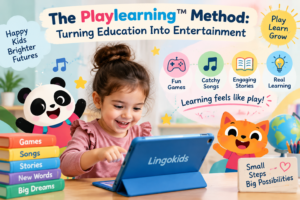
Lingokids is an educational app that combines language learning with entertainment. The platform follows a method known as Playlearning™, where children learn important skills through activities that feel like play. The idea is simple: when children enjoy the learning process, they become more interested, stay focused longer, and remember information more effectively. Traditional education often separates learning and fun, but Lingokids attempts to bring both together in one experience.
The app was created specifically for young children who are developing their first language skills or learning English as an additional language. Instead of presenting long explanations or complicated lessons, Lingokids introduces concepts through colorful animations, interactive challenges, songs, and games. This approach matches the way many young children naturally absorb information. A child may not remember a vocabulary list from a textbook, but they are more likely to remember a word connected to a fun character, a catchy song, or an interactive game.
What Makes Lingokids Different From Traditional Learning Apps
Many educational apps focus heavily on quizzes and repetition. While repetition is useful for learning, children also need motivation and engagement. Lingokids focuses on creating an environment where children feel encouraged to explore. The platform includes thousands of interactive games, songs, and learning activities that cover different skills while maintaining a playful experience.
The difference comes from how learning is presented. Instead of saying, “Today we will memorize ten new words,” Lingokids creates situations where children naturally encounter words during activities. For example, a child may learn animal names through a game, practice pronunciation through songs, or understand simple instructions while completing challenges. This makes language learning feel less like a requirement and more like discovering something new.
The Playlearning™ Method: Turning Education Into Entertainment
The central idea behind Lingokids is the Playlearning™ method. Children are naturally playful learners. They touch objects, repeat sounds, imitate adults, and experiment with their surroundings. Playlearning uses these natural behaviors as a foundation for education. Instead of forcing children to sit through traditional lessons, it creates experiences where learning happens while they are actively participating.
Research in early childhood education often highlights the importance of interactive experiences. Young learners usually benefit from activities involving movement, visuals, sounds, and repetition. Lingokids combines these elements by offering animated lessons, songs, games, and storytelling activities that encourage children to practice language skills without feeling pressured.
Learning Through Games, Songs, and Interactive Activities
Games are one of the strongest tools for keeping children interested. When children play educational games, they often repeat actions many times without realizing they are practicing. A vocabulary game may introduce a new word, ask the child to identify an object, and then reinforce the meaning through another activity.
Songs also play a major role in language learning. Children often remember melodies and rhythms more easily than isolated words. Lingokids uses songs and musical activities to help children recognize sounds, improve pronunciation, and develop listening skills. These experiences create positive associations with language, making children more comfortable using new words.
According to Lingokids information, the platform provides more than 4,000 interactive games, songs, and shows designed for children, covering hundreds of learning objectives across different areas.
Why Early Language Learning Matters for Children
The early years of childhood are an important period for developing communication skills. Young children are naturally curious about sounds, expressions, and conversations. Introducing language learning during this stage can help children become more confident communicators and develop stronger listening abilities.
Language is not only about speaking words. It also helps children express emotions, understand others, build relationships, and explore ideas. When children learn new vocabulary, they gain new ways to describe the world around them. A child who learns words related to colors, animals, family members, or daily activities can communicate their thoughts more clearly.
Building Vocabulary and Communication Skills From a Young Age
Vocabulary growth is one of the foundations of language development. Children need repeated exposure to words in different situations before they fully understand and use them. Lingokids supports this process by introducing vocabulary through multiple formats, including visuals, audio, stories, and games.
For example, a child may hear a word in a song, see its meaning through animation, and then practice it through an interactive activity. This repeated exposure helps strengthen memory and understanding. Instead of learning words once and forgetting them, children encounter language naturally throughout different activities.
How Lingokids Helps Children Learn English Naturally
One of the biggest advantages of Lingokids is that it creates an environment where children can learn English naturally. The platform does not rely only on direct instruction. Instead, it allows children to discover language through exploration.
Children learn languages best when they hear and interact with them regularly. Lingokids provides opportunities for listening practice, pronunciation improvement, and vocabulary development through engaging content. The experience is designed to encourage curiosity rather than create pressure.
Interactive Lessons Designed for Young Minds
The lessons inside Lingokids are created with young learners in mind. Activities are short, colorful, and interactive, helping children maintain attention. The content adapts to children’s abilities, allowing them to learn at a comfortable pace.
The platform includes activities related to literacy, communication, creativity, science, mathematics, and other early learning areas. This means children are not only learning language but also developing broader skills that support overall growth.
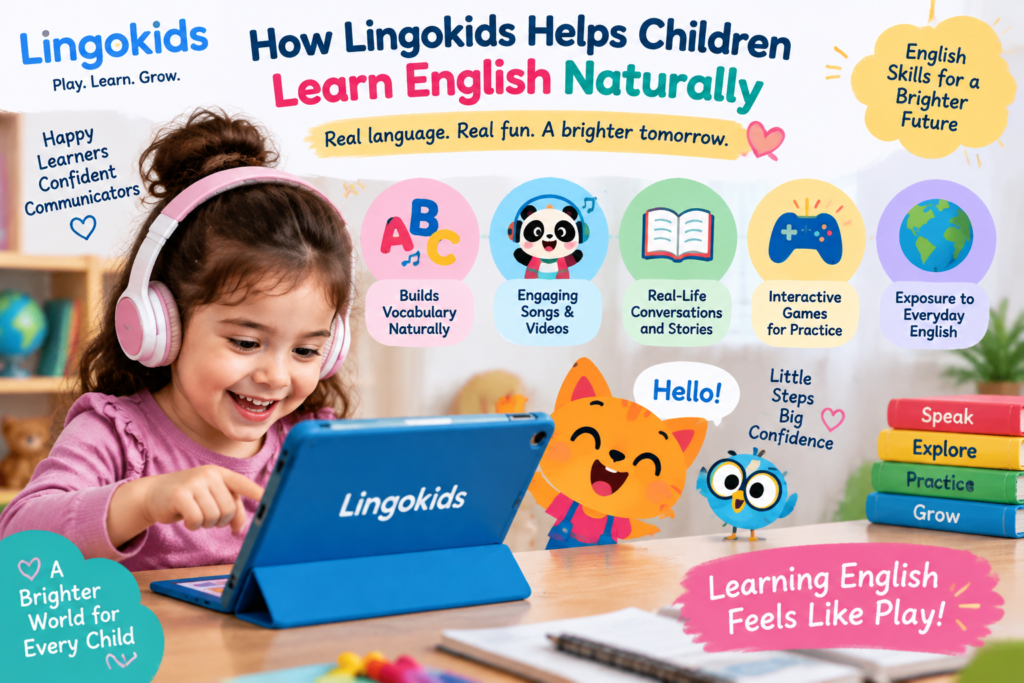
Fun Features That Keep Kids Engaged While Learning
Children are naturally attracted to stories, characters, challenges, and rewards. Lingokids uses these elements to make learning exciting. Instead of presenting education as a serious task, it creates an interactive world where children can explore and discover.
Educational Games and Challenges
Games help transform practice into entertainment. A child who may become bored repeating vocabulary exercises can remain interested when the same practice appears as a challenge or adventure.
Interactive games can help children develop:
- Vocabulary recognition
- Listening ability
- Problem-solving skills
- Memory
- Confidence with new words
The combination of fun and learning helps children stay motivated.
Songs, Stories, and Animated Characters
Characters and stories make learning more personal. Children often connect emotionally with friendly characters, making educational experiences more memorable.
Songs help children practice pronunciation, while stories introduce language in context. Instead of learning words separately, children understand how words are used in real situations.
A Safe Digital Learning Environment for Kids
Parents often worry about digital content and screen time. A major concern is whether an app provides safe, age-appropriate experiences. Lingokids focuses on creating content specifically for children and promotes a controlled learning environment.
Ad-Free Content and Parent-Friendly Controls
Many free apps include advertisements that can distract children. Lingokids emphasizes a child-friendly experience with no ads in its learning environment. This allows children to focus on activities without unexpected interruptions.
Parents can also use progress features to understand what their children are learning and how they are interacting with the platform.
How Lingokids Supports Different Learning Styles
Every child learns differently. Some children respond better to visual information, while others learn through sounds, music, or hands-on interaction. Lingokids combines multiple learning methods to support different preferences.
Visual learners benefit from animations and colorful graphics. Auditory learners can practice through songs and spoken activities. Children who enjoy interaction can participate through games and challenges.
This variety helps children discover learning methods that feel natural to them.
Benefits of Using Lingokids for Language Development
Using Lingokids regularly can support several areas of early language development. The platform encourages children to listen carefully, recognize words, understand meanings, and practice communication.
Improving Listening, Speaking, Reading, and Vocabulary Skills
Language learning involves multiple skills working together. Children need to hear words before they can confidently use them. Lingokids supports this process by providing repeated listening opportunities and interactive practice.
Some potential benefits include:
- Stronger vocabulary awareness
- Better pronunciation practice
- Increased confidence with English
- Improved listening skills
- Greater interest in learning
The platform’s combination of education and entertainment helps children develop these abilities naturally.
Lingokids for Parents in the United States
For parents in the US, Lingokids offers a convenient way to introduce educational activities into children’s daily routines. Whether children are learning English as their first language or exploring English as another language, the platform provides accessible learning opportunities.
Parents can use Lingokids as a supplement to home learning, preschool activities, or classroom education. It is not designed to replace personal interaction but rather to support children’s development through additional practice.
Tracking Progress and Supporting Children’s Growth
Understanding a child’s progress helps parents provide better support. Lingokids includes features that allow families to follow learning activities and understand which skills children are practicing.
This gives parents insight into their child’s interests and helps them encourage learning beyond the app.
Conclusion
Language learning becomes easier when children feel excited, curious, and motivated. Lingokids understands that young children learn differently from adults, which is why it focuses on play, creativity, and interaction. Through games, songs, stories, and educational activities, the platform transforms language practice into an enjoyable experience.
For families looking for a child-friendly learning solution, Lingokids provides a combination of entertainment and education designed around early childhood development. By making learning feel like play, it helps children build confidence and develop important communication skills while having fun.
Read Also:
Top Reasons to Consider OYO Rooms UK for Your Next Trip
Key Things to Know About Credit Monitoring Services from IdentityIQ (US)
Building a Stronger Cybersecurity Strategy with Bitdefender
Top Tips for Planning a Memorable Winter Vacation with Skiworld
Why Novakid Global ARABIC Is a Game-Changer in Digital Language Education
Frequently asked questions
Lingokids is mainly designed for children between 2 and 8 years old, offering age-appropriate activities for early learners.
Yes, Lingokids focuses on English language learning through interactive games, songs, stories, and activities that encourage vocabulary and communication development.
Lingokids is designed as a child-focused platform with age-appropriate content and an ad-free learning experience.
No. Along with language skills, Lingokids includes activities related to literacy, creativity, science, mathematics, and other early learning areas.
Yes, Lingokids provides features that allow parents to understand their child’s learning activities and development.