

Cloud infrastructure has become the foundation of modern digital businesses. From startups launching their first applications to large companies managing complex online services, organizations need reliable cloud platforms that are powerful but not unnecessarily complicated. Managing servers, databases, storage, networking, security, and scaling can quickly become overwhelming when businesses rely on traditional infrastructure methods. This is where DigitalOcean helps simplify the entire cloud management process by providing developer-friendly tools, straightforward pricing, and easy-to-use infrastructure solutions.
Table of Contents
ToggleMany cloud platforms provide thousands of features, but sometimes too many options create additional complexity. Developers often spend more time configuring infrastructure instead of building products. DigitalOcean focuses on reducing this complexity by offering simple cloud services that allow teams to deploy applications, manage servers, and scale resources without requiring deep infrastructure expertise. Its product ecosystem includes virtual machines, managed databases, storage solutions, Kubernetes services, and application deployment tools designed to make cloud operations easier.
Think of cloud infrastructure like managing a large building. Traditional infrastructure management requires handling every small detail, including electricity, maintenance, security systems, and equipment. DigitalOcean works more like a smart building management system where many complicated tasks are simplified through automation and easy controls. This approach allows developers and businesses to focus more on innovation rather than spending endless hours maintaining infrastructure.
Understanding DigitalOcean and Its Role in Modern Cloud Computing
DigitalOcean is a cloud infrastructure provider designed primarily for developers, startups, and businesses that need accessible cloud computing solutions. The platform provides essential cloud services that help users create, deploy, and manage applications efficiently. Instead of requiring complicated enterprise-level cloud knowledge, DigitalOcean provides a cleaner experience where users can quickly understand available resources and manage them effectively.
One of the biggest challenges in cloud computing is the learning curve. Many organizations struggle because cloud platforms can involve complicated configurations, multiple service layers, and unpredictable costs. DigitalOcean addresses this challenge by focusing on simplicity. Users can create cloud servers, configure applications, and monitor performance through an intuitive dashboard.
DigitalOcean’s main computing service, called Droplets, provides Linux-based virtual machines that developers can use as standalone servers or as part of larger cloud architectures. These virtual machines allow businesses to host websites, APIs, databases, development environments, and various applications.
The platform is especially useful for:
- Software developers building web applications
- Startups creating digital products
- Small businesses moving services online
- Development teams requiring flexible testing environments
- Companies looking for scalable infrastructure
By reducing unnecessary complexity, DigitalOcean allows teams to adopt cloud technology without needing a large infrastructure management department.
Why Businesses Need Simpler Cloud Infrastructure Solutions
Modern businesses generate enormous amounts of digital activity. Websites receive traffic, applications process user requests, and databases store critical information. Without proper infrastructure management, companies may experience slow performance, downtime, security problems, or unnecessary expenses.
Cloud management becomes challenging because businesses must handle multiple responsibilities:
- Server configuration
- Software updates
- Security monitoring
- Backup management
- Resource scaling
- Network configuration
- Cost optimization
A complicated cloud environment can slow down development because engineers spend valuable time maintaining systems instead of improving products.
DigitalOcean simplifies these tasks by offering managed services and automation features. For example, instead of manually installing and maintaining database systems, businesses can use managed databases that handle many administrative responsibilities automatically. This allows teams to concentrate on application development rather than infrastructure maintenance.
The importance of simplicity is increasing because modern companies need to move quickly. A startup may need to launch a product within weeks, while an established business may need to create new services rapidly to compete. Cloud platforms that reduce technical barriers give organizations more flexibility and speed.
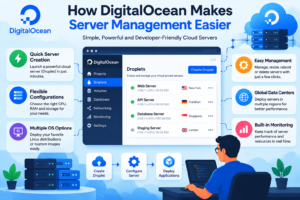
How DigitalOcean Makes Server Management Easier
Managing physical servers traditionally required purchasing hardware, setting up networks, installing operating systems, and maintaining equipment. Cloud computing changed this process by allowing businesses to create virtual servers instantly. DigitalOcean improves this experience further by making server creation simple through its Droplet system.
A DigitalOcean Droplet is a virtual machine that provides computing resources such as CPU, memory, storage, and networking capabilities. Developers can select the required configuration and launch a server within minutes.
Instead of dealing with complicated infrastructure setup, users can:
- Choose a server size
- Select an operating system
- Deploy applications
- Configure security settings
- Increase resources when needed
This simplicity makes server management accessible even for teams without dedicated cloud engineers.
Droplets: Simple and Flexible Cloud Virtual Machines
Droplets are one of DigitalOcean’s most popular services because they provide flexibility without unnecessary complexity. Developers can use them for many purposes, including hosting websites, running backend systems, creating testing environments, and deploying business applications.
DigitalOcean provides different Droplet configurations based on workload requirements. Small projects can use basic configurations, while growing applications can upgrade resources as demand increases. The platform also provides predictable pricing, helping businesses understand their infrastructure expenses more easily.
Scalability is important because applications rarely remain the same size forever. A small online store may eventually receive thousands of visitors daily. With cloud-based infrastructure, businesses can increase computing resources without replacing physical hardware.
One-Click Deployments for Faster Application Launches
Developers often spend significant time installing software, configuring dependencies, and preparing environments before launching applications. DigitalOcean reduces this workload through simplified deployment options.
One-click applications allow users to quickly install popular software stacks and development tools. Instead of manually configuring every component, developers can start with ready-to-use environments.
This approach saves time and reduces configuration mistakes. For example, a developer building a website may need a server, database, programming environment, and security configuration. Automated deployment tools help prepare these components faster.
The result is a smoother development experience where teams can move from idea to working application more quickly.
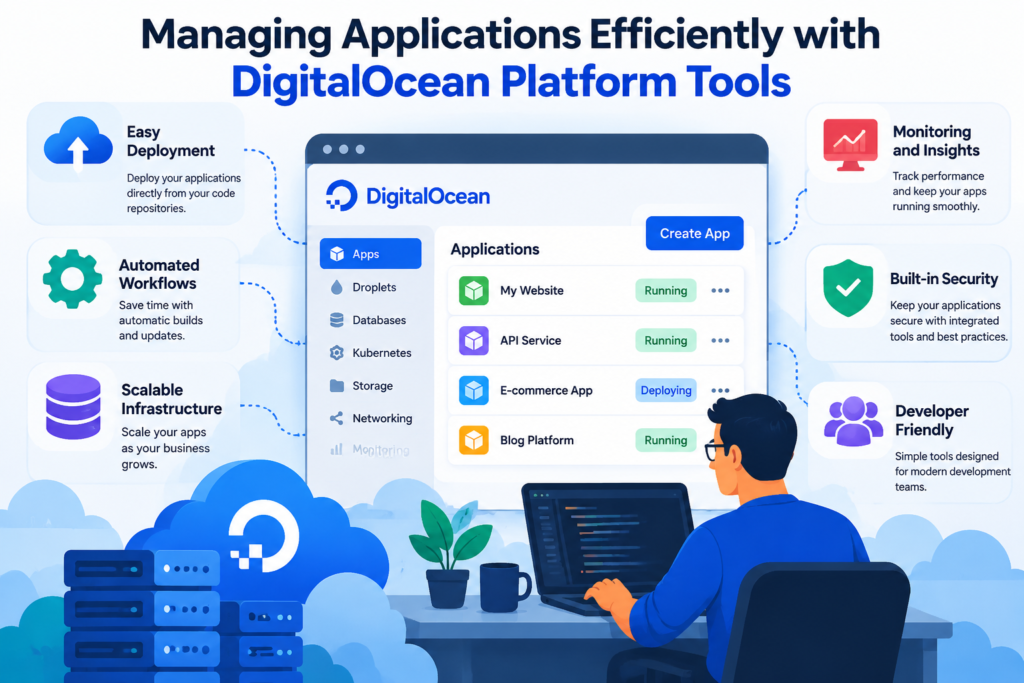
Managing Applications Efficiently with DigitalOcean Platform Tools
Application management involves more than simply running code. Businesses need reliable deployment systems, scaling capabilities, and monitoring tools to keep applications performing well.
DigitalOcean provides services designed to simplify application deployment. The platform allows developers to connect their code repositories and deploy applications without manually managing server configurations.
DigitalOcean App Platform for Automated Deployment
The DigitalOcean App Platform is a Platform-as-a-Service solution that helps developers build, deploy, and scale applications. It supports automated deployment workflows and allows teams to focus on writing code instead of managing servers.
With App Platform, developers can:
- Deploy applications directly from code repositories
- Automate application builds
- Manage scaling requirements
- Reduce server administration tasks
This is particularly useful for startups and small teams where developers often handle multiple responsibilities.
Simplifying Database and Storage Management
Databases are among the most important components of any application. However, managing databases requires expertise in backups, security updates, performance optimization, and scaling.
DigitalOcean simplifies database operations through managed database services. These services reduce the amount of manual maintenance required by automatically handling important database administration tasks.
Managed Databases for Reduced Administrative Work
A managed database allows businesses to use popular database technologies without managing every technical detail. DigitalOcean provides managed database options designed for easier deployment and maintenance.
Benefits include:
- Automated backups
- Improved reliability
- Easier scaling
- Reduced maintenance workload
Instead of spending hours maintaining database servers, developers can focus on improving application features.
Scalable Storage Options for Growing Businesses
Modern applications require reliable storage for images, documents, backups, and user-generated content. DigitalOcean provides storage solutions that help businesses store and access data efficiently.
Cloud storage allows companies to expand capacity as their requirements grow. This eliminates the limitations of traditional storage systems where businesses must purchase additional hardware.
Improving Developer Productivity Through Automation
Automation is one of the biggest advantages of cloud computing. When repetitive tasks are automated, developers can spend more time creating valuable features.
DigitalOcean supports automation through APIs, infrastructure tools, and integration options.
API-Based Infrastructure Control
Developers can manage DigitalOcean resources programmatically using APIs. This allows teams to automate tasks such as creating servers, managing applications, and adjusting infrastructure settings.
Automation helps businesses create consistent workflows and reduces human errors.
For example, a company can automatically create testing environments whenever developers start a new project. Once testing is complete, those resources can be removed to reduce unnecessary costs.
Kubernetes and Container Management
Container technology has become popular because it allows applications to run consistently across different environments. DigitalOcean provides Kubernetes solutions that help teams manage containerized applications more easily.
Kubernetes can be powerful but complex. DigitalOcean simplifies Kubernetes management by handling many underlying infrastructure responsibilities, allowing developers to focus on deploying applications.
DigitalOcean Security Features for Reliable Cloud Operations
Security is a major concern for every organization using cloud infrastructure. Businesses need protection against unauthorized access, data loss, and operational risks.
DigitalOcean provides security features such as:
- Cloud firewalls
- Secure networking options
- Monitoring capabilities
- Backup solutions
By providing built-in security tools, DigitalOcean helps businesses create safer cloud environments without requiring extensive security expertise.
A secure infrastructure creates confidence for both businesses and customers. When applications are protected properly, companies can focus on growth instead of constantly reacting to security problems.
Cost Management and Transparent Cloud Pricing
Cloud costs can become difficult to control when pricing structures are complicated. Many businesses struggle with unexpected bills because they cannot easily predict resource usage.
DigitalOcean focuses on transparent pricing models that make budgeting easier. The company provides pricing information for services such as Droplets and application platforms, allowing users to estimate expenses before deployment.
Predictable Spending for Startups and Enterprises
For startups, predictable costs are extremely important. A young company needs to carefully manage expenses while building products.
DigitalOcean helps businesses:
- Select resources based on actual needs
- Scale gradually
- Avoid unnecessary infrastructure spending
- Monitor usage more effectively
This financial clarity makes cloud adoption easier for organizations with limited budgets.
How DigitalOcean Supports Modern Development Teams
Development teams today require speed, collaboration, and flexibility. DigitalOcean supports these needs by providing tools that simplify infrastructure management.
A developer can quickly create environments for:
- Testing new ideas
- Building applications
- Deploying production services
- Experimenting with new technologies
This flexibility improves productivity because teams do not have to wait for traditional infrastructure processes.
For remote teams, cloud platforms also create shared environments where developers can collaborate from different locations.
DigitalOcean vs Traditional Infrastructure Management
Traditional infrastructure requires physical servers, hardware maintenance, and dedicated technical resources. While this approach may work for some organizations, it often creates higher operational complexity.
Cloud infrastructure changes this model by offering:
Feature | Traditional Infrastructure | DigitalOcean Cloud |
Server Setup | Requires hardware installation | Virtual servers created quickly |
Scaling | Requires purchasing equipment | Resources adjusted digitally |
Maintenance | Managed internally | Many tasks simplified |
Cost Planning | Hardware investment required | Usage-based cloud spending |
Deployment Speed | Slower setup process | Faster application deployment |
DigitalOcean helps businesses move from hardware-focused management to software-driven infrastructure.
Practical Use Cases of DigitalOcean Cloud Infrastructure
DigitalOcean can support many types of projects and businesses. Common use cases include:
- Hosting websites and online platforms
- Running APIs and backend services
- Creating development environments
- Deploying SaaS applications
- Managing databases
- Supporting AI and modern workloads
Its simplicity makes it attractive for developers who want cloud capabilities without unnecessary complexity.
Conclusion
DigitalOcean simplifies cloud infrastructure management by combining powerful cloud services with an easy-to-understand user experience. From virtual machines and application deployment to managed databases and scalable storage, the platform helps businesses reduce technical complexity and improve productivity.
Cloud infrastructure does not have to feel overwhelming. With tools designed for simplicity, automation, and flexibility, DigitalOcean allows developers and businesses to spend less time managing servers and more time building valuable digital products.
For organizations searching for a developer-friendly cloud platform, DigitalOcean provides a practical approach to modern infrastructure management.
Read Also:
Unlocking Wellness: How Your Super DE is Transforming the Superfood Industry
Tiqets: Your Ultimate Ticketing Platform for Seamless Travel and Attraction Bookings
Weight Watchers Online: Achieve Your Health Goals with Personalized Weight Loss Programs
TicketNetwork: Your Go-To Marketplace for Concert, Sports, and Event Tickets
The Rise of Kontist: Smart Banking Solutions for Modern Professionals
Why Novakid Global ARABIC Is a Game-Changer in Digital Language Education
Frequently asked questions
DigitalOcean is mainly used for cloud computing services such as hosting websites, running applications, managing databases, and deploying scalable infrastructure.
Yes, DigitalOcean is considered beginner-friendly because it provides simple interfaces, clear documentation, and easy deployment options.
Droplets are cloud-based virtual machines that allow users to run applications, websites, and other workloads on DigitalOcean infrastructure.
Yes, businesses can increase resources and use additional services as their applications grow.
DigitalOcean reduces complexity through automation, managed services, simple dashboards, predictable pricing, and developer-focused tools.