
Online education has completely changed how people gain new skills, improve their careers, and explore new areas of interest. A decade ago, learning from world-class universities usually required expensive tuition fees, relocation, and a strict classroom schedule. Today, platforms like edX have made high-quality education accessible to learners across the globe. Founded by Harvard University and MIT, edX has grown into a major online learning platform offering courses from universities, companies, and professional organizations.
However, having thousands of courses available does not automatically mean every course will be the right choice for every learner. Choosing an online course is similar to selecting a road for a long journey. If you know your destination, the journey becomes easier. If you randomly choose a path, you may spend time and money without reaching your goals. This is why learners should carefully understand their objectives, course structure, instructor quality, certification options, and career relevance before enrolling.
Whether you are a student looking to develop additional skills, a working professional planning a career change, or someone simply interested in personal growth, knowing how to select the right edX course can help you make a smarter learning decision.
Table of Contents
ToggleUnderstanding edX and Its Role in Online Learning
edX is a global online education platform that provides access to courses created by universities, institutions, and industry organizations. The platform offers subjects ranging from computer science and artificial intelligence to business, healthcare, engineering, humanities, and professional development. Learners can explore individual courses, professional certificates, MicroMasters programs, and other structured learning options depending on their goals.
One of the biggest advantages of edX is that it combines academic knowledge with practical skill development. Many courses are designed by recognized universities and organizations, allowing learners to study concepts that are similar to classroom-based programs. However, online learning requires a different mindset. Unlike traditional classrooms where teachers regularly remind students about deadlines, online platforms require learners to manage their own time and motivation.
Before selecting a course, learners should understand that online education is not simply about watching videos. Quality courses usually include assignments, quizzes, projects, discussions, and practical exercises. A learner who actively participates will gain much more value than someone who only completes videos without practicing the concepts.
How edX Became a Popular Learning Platform
The popularity of edX comes from its focus on accessible education and partnerships with respected academic institutions. The platform started with the goal of expanding access to university-level education through massive open online courses (MOOCs). Over time, it expanded its offerings to include career-focused programs and professional credentials.
Modern learners often choose platforms like edX because traditional education can sometimes be expensive, time-consuming, or difficult to combine with personal responsibilities. Online courses allow people to learn from anywhere using a computer or mobile device. This flexibility has made online learning attractive for students, employees, entrepreneurs, and lifelong learners.
However, popularity should not be the only reason to choose a course. A highly rated course may still not match your current skill level or career objectives. Before clicking the enrollment button, learners should carefully study the course description, syllabus, duration, instructor information, and expected outcomes.
Types of Learning Programs Available on edX
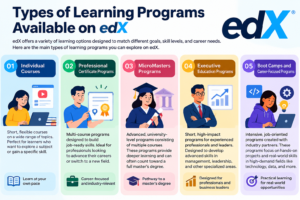
edX provides several learning formats designed for different types of learners. Individual courses are suitable for people who want to learn a specific topic, while professional certificates are often created for learners aiming to develop career-related skills. More advanced programs may provide deeper learning experiences through multiple connected courses.
Some common learning options include:
- Individual online courses
- Professional certificate programs
- MicroMasters programs
- Executive education programs
- Boot camps and career-focused learning paths
Each option serves a different purpose. A beginner exploring programming may only need a single introductory course, while a professional preparing for a career transition may benefit from a structured certificate program.
Why Learners Choose edX Courses
The growth of online learning is driven by convenience, affordability, and accessibility. Learners no longer need to wait for admission cycles or move to another city to access quality education. Platforms like edX allow people to start learning according to their own schedules.
One important reason learners choose edX is the opportunity to study subjects from respected institutions. Access to expert-designed content helps learners build knowledge that may otherwise require attending expensive programs. However, learners should remember that completing an online course requires commitment. A certificate alone does not create expertise; consistent practice and application create real skill.
Access to University-Level Education
Many learners are attracted to edX because courses are often developed with academic expertise. Studying material created by experienced instructors can provide structured knowledge and a clear learning path.
For example, someone interested in data science may find courses covering programming, statistics, machine learning, and data analysis. Instead of learning random topics from different websites, a learner can follow a planned curriculum.
At the same time, learners should check whether the course matches their existing knowledge. Some university-level courses assume basic understanding of certain concepts. Beginners should start with introductory courses before moving to advanced subjects.
Flexible Learning for Different Schedules
Flexibility is one of the strongest advantages of online education. Students can learn after college, professionals can study after work, and busy individuals can create their own learning schedules.
However, flexibility can also become a challenge. Without proper planning, learners may postpone lessons repeatedly. Successful online learners usually create a weekly schedule, set realistic goals, and regularly practice what they learn.
Common Mistakes Learners Make When Choosing edX Courses
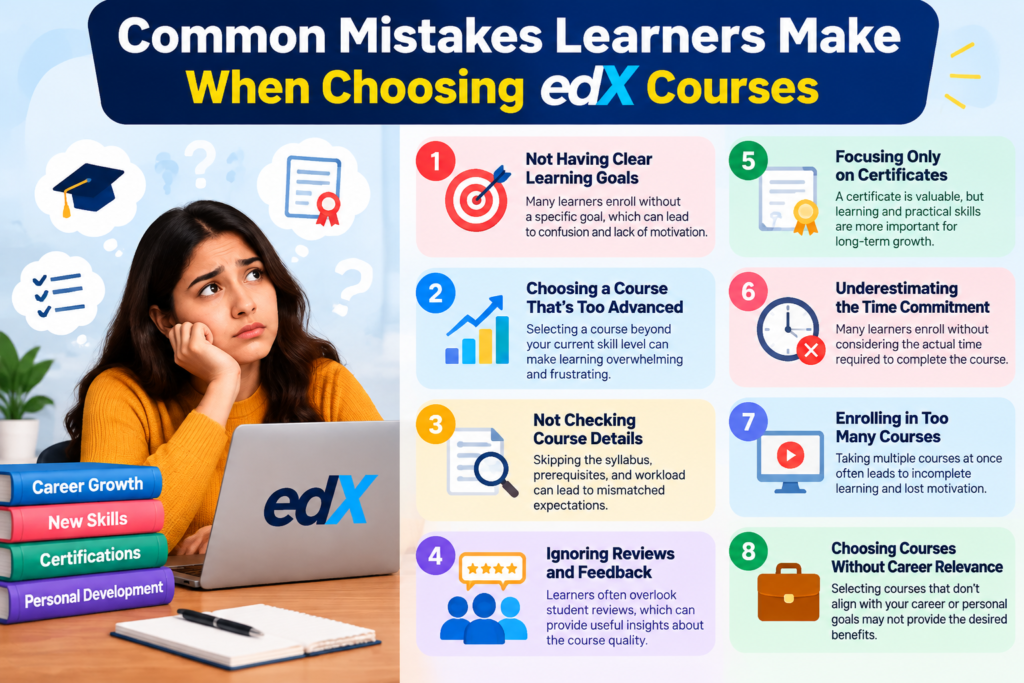
Many learners make similar mistakes when starting online education. One common mistake is choosing courses based only on popularity. Another is enrolling in multiple courses without completing any of them.
Other mistakes include:
- Ignoring prerequisites
- Underestimating time commitment
- Focusing only on certificates
- Not practicing skills
- Choosing courses without career relevance
A successful learning journey requires focus and consistency.
Important Factors to Consider Before Selecting an edX Course
Choosing an edX course should be a thoughtful process rather than an impulsive decision. Many learners select courses because the title sounds interesting but later discover that the content does not match their expectations.
Before enrolling, consider your goals, current knowledge level, available time, and desired outcome.
Define Your Learning Goals First
The first question every learner should ask is: Why am I taking this course?
Your reason might be:
- Improving career opportunities
- Learning a new professional skill
- Preparing for higher education
- Exploring a personal interest
- Updating existing knowledge
A learner who wants a job in technology may choose programming, cloud computing, or data analysis courses. Someone interested in management may focus on leadership, marketing, or business strategy.
Clear goals help you avoid wasting time on courses that do not support your future plans.
Check Course Difficulty and Requirements
Every course has a recommended skill level. Some courses are designed for complete beginners, while others expect previous experience.
Before joining, review:
- Required background knowledge
- Course syllabus
- Weekly workload
- Assignments and projects
- Learning outcomes
Starting with a course that is too advanced can create frustration. On the other hand, choosing a course below your skill level may not provide enough growth.
Evaluate Instructor Background and Course Quality
The instructor plays a major role in the learning experience. A good instructor can simplify difficult topics and make complex ideas easier to understand.
Learners should check:
- Instructor qualifications
- Teaching experience
- Course reviews
- Student feedback
- Practical activities included
A course with strong teaching methods and hands-on practice usually creates better learning results.
Understanding edX Course Categories and Learning Paths
edX offers courses across many fields, allowing learners to select programs according to their interests and career goals.
Technology and Programming Courses
Technology courses are among the most popular choices because digital skills are valuable across industries. Learners can explore areas such as:
- Programming
- Artificial intelligence
- Data science
- Cybersecurity
- Cloud computing
Technology learners should focus on courses that include practical assignments. Watching lectures about coding is not enough; writing programs and building projects create real understanding.
Business, Management, and Professional Courses
Business courses help learners develop skills in leadership, finance, marketing, entrepreneurship, and project management.
These courses can benefit:
- Business owners
- Managers
- Students
- Professionals seeking promotions
When selecting business courses, learners should consider whether the content provides practical examples and real-world applications.
Tips for Getting Maximum Value From edX Learning
To make the most of your edX experience, treat online learning like a serious educational commitment.
Create a learning routine, take notes, complete assignments, participate in discussions, and apply your knowledge through projects.
The best learners are not necessarily those who complete the most courses. They are the ones who understand concepts deeply and use their knowledge effectively.
Free Courses vs Paid Certificates on edX
Many learners wonder whether they should choose free learning options or pay for certificates. The answer depends on personal goals.
edX often allows learners to access course materials through audit options, while verified certificates generally require payment. Certificate availability and pricing can vary depending on the program.
Benefits of Auditing Free Courses
Free access can be useful for:
- Exploring a new subject
- Learning basic concepts
- Deciding whether a topic interests you
If you are unsure about a subject, starting with free learning can help you make a better decision before investing money.
When an edX Certificate Is Worth Paying For
A certificate may be valuable when:
- You want proof of completion
- You are adding credentials to your resume
- You need structured motivation
- The certificate is connected to a professional goal
However, certificates work best when combined with practical experience. Employers often value demonstrated skills, projects, and problem-solving ability along with credentials.
edX Certificates, Credentials, and Career Growth
Online certificates can support professional development, but learners should have realistic expectations. A certificate represents completed learning, but it does not replace experience.
Career growth usually comes from combining education, practical projects, networking, and continuous improvement.
How Employers View Online Certificates
The value of an online certificate depends on several factors:
- The reputation of the institution
- The relevance of the skill
- The learner’s practical ability
- The job requirements
A certificate from a recognized program can strengthen a professional profile, especially when supported by examples of applied knowledge.
Building a Strong Portfolio Alongside Certificates
Learners should consider creating:
- Projects
- Case studies
- Personal websites
- GitHub repositories
- Professional presentations
A portfolio shows employers what you can actually do.
Conclusion
Choosing the right course on edX requires careful planning and self-awareness. With thousands of learning options available, learners need to look beyond course titles and consider their goals, skill levels, career plans, and learning preferences.
edX can be a powerful tool for gaining knowledge and developing professional skills, but success depends on how actively learners engage with the material. A certificate can open opportunities, but practical experience, curiosity, and continuous improvement create long-term growth.
Before selecting any course, ask yourself what you want to achieve, why the course fits your goals, and how you will apply what you learn. When chosen wisely, an edX course can become more than an online class—it can become a meaningful step toward personal and professional development.
Read Also:
A Complete Guide to Creating and Editing Documents With DocHub
How DigitalOcean Can Simplify Cloud Infrastructure Management
Everything You Need to Know About DHgate: A Complete Guide
Key Things to Know Before Joining the Daily High Club Affiliate Program
Top Features to Know Before Using Crypto.com for Digital Assets
Frequently asked questions
Yes, edX offers many beginner-friendly courses. Learners should check course descriptions and difficulty levels before enrolling.
edX certificates can support career development, especially when combined with practical skills, projects, and relevant experience.
Many edX courses provide free access to learning materials, while verified certificates and certain programs may require payment.
Choose a course based on your goals, current knowledge level, available time, instructor quality, and expected outcomes.
It is usually better to focus on completing one course successfully rather than starting many courses and leaving them unfinished.