

Learning a new language during childhood can open doors to new cultures, better communication skills, and stronger cognitive development. For many families, Arabic is becoming an increasingly valuable language choice because of its cultural importance, global relevance, and connection to history, literature, and traditions. However, choosing the right Arabic learning program for children is not always simple. Parents often wonder whether an online platform can truly keep their child interested, whether teachers understand how children learn, and whether the lessons provide real language progress instead of just memorizing words.
Table of Contents
ToggleNovakid Global ARABIC is designed around the idea that children learn languages best when they are actively involved, entertained, and encouraged to communicate. While Novakid is widely known for its online language education approach, parents considering any digital language program should carefully evaluate teaching quality, lesson structure, teacher interaction, technology requirements, and the child’s personal learning style. Novakid’s educational model focuses on interactive lessons, personalized learning, and child-friendly activities rather than traditional textbook-heavy methods.
Before choosing Novakid Global ARABIC for your child, it is important to understand how the platform works, what benefits it offers, and what factors parents should consider. A good language program is not just about learning vocabulary; it is about helping children feel comfortable speaking, understanding, and using the language naturally.
Understanding Novakid Global ARABIC and Its Learning Approach
Why Online Arabic Learning Is Becoming Popular Among Families
The way children learn languages has changed dramatically in recent years. Many parents who once depended only on local language schools or private tutors are now exploring online education because it offers convenience, flexibility, and access to teachers from different parts of the world. Arabic learning especially benefits from online platforms because children can interact with fluent speakers without needing to travel or attend physical classes.
Traditional language classrooms can sometimes struggle to provide enough speaking practice for every child. A teacher may have twenty or thirty students, making it difficult to give each learner individual attention. Online one-on-one learning models attempt to solve this problem by creating a more personalized environment where the child can ask questions, practice pronunciation, and receive immediate feedback.
Novakid’s online teaching structure emphasizes interactive lessons where children participate through digital activities, visual materials, and communication exercises. The company’s existing online language programs use short focused lessons, personalized progress tracking, and interactive classroom tools to keep children engaged.
For parents, the biggest attraction is often convenience. A child can learn from home without spending time traveling to a classroom. This can be especially helpful for busy families who want consistent language practice but have limited schedules.
However, parents should remember that online learning works best when children have a supportive environment. A quiet learning space, stable internet connection, and regular practice routine can significantly influence results.
Key Features Parents Should Evaluate Before Enrolling
Interactive Lessons Designed for Young Learners
Children learn differently from adults. A six-year-old usually does not want a grammar lecture or a long explanation about sentence structure. Young learners need movement, storytelling, games, pictures, repetition, and encouragement. A successful children’s language program transforms learning into an experience rather than a boring task.
Novakid’s educational philosophy focuses on making lessons engaging through interactive activities and child-friendly teaching techniques. Similar approaches in online language education often include visual learning tools, games, rewards, and activities that encourage children to participate actively.
Parents should look for lessons that answer important questions:
- Does the child get opportunities to speak?
- Are lessons adapted to the child’s age?
- Does the teacher encourage participation?
- Are activities enjoyable enough to maintain attention?
A good Arabic course should help children move from recognizing words to actually using them. For example, instead of only learning the Arabic word for “book,” children should practice using it in simple conversations and real-life situations.
The goal is to create confidence. When children enjoy the process, they are more likely to continue learning and develop long-term language skills.
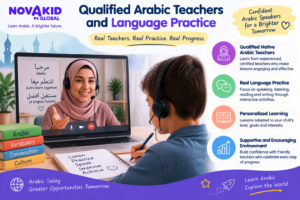
Qualified Arabic Teachers and Language Practice
A language teacher can completely change a child’s learning experience. The same lesson plan can feel exciting with the right teacher and boring with the wrong one. For children, patience, energy, encouragement, and communication style matter just as much as language knowledge.
Parents considering Novakid Global ARABIC should pay attention to teacher qualifications and teaching methods. A good Arabic instructor should understand pronunciation, vocabulary development, and how to make children comfortable speaking.
Learning Arabic has unique challenges. The language has different sounds, writing patterns, and sentence structures compared with many other languages. Children need consistent pronunciation practice and opportunities to listen to natural Arabic speech.
One advantage of online language platforms is that they can connect students with specialized teachers instead of limiting families to local options. Some descriptions of Novakid Global ARABIC highlight the use of Arabic-speaking instructors and personalized lessons designed for children.
Parents should also consider arranging a trial lesson when available. A trial class can reveal whether the teacher’s personality matches the child’s learning style.
Age Suitability and Learning Levels for Children
Choosing the Right Starting Level
Every child begins language learning from a different place. Some children may already hear Arabic at home, while others may be complete beginners. Choosing the correct starting level prevents frustration and helps children progress comfortably.
A beginner child should not immediately be expected to read complex Arabic sentences or memorize large vocabulary lists. Early lessons should focus on listening, basic words, simple expressions, and confidence-building activities.
Younger children usually benefit from learning through songs, pictures, stories, and repetition. Older children may be ready for more structured conversations, reading practice, and grammar concepts.
Parents should ask:
- What age group is the course designed for?
- How does the platform measure progress?
- Can lessons adapt to different learning speeds?
Personalized learning is important because children develop language abilities at different rates. One child may quickly understand spoken Arabic but struggle with writing, while another may enjoy reading but need more speaking practice.
Supporting Beginners With No Arabic Background
Many parents worry that their child cannot start Arabic because they have no previous exposure to the language. In reality, childhood is one of the best times to begin learning a new language.
Children are naturally curious and often imitate sounds quickly. They can develop pronunciation habits more easily than adults because their brains are highly adaptable.
A beginner-friendly Arabic program should introduce concepts gradually:
- Basic greetings
- Everyday vocabulary
- Numbers and colors
- Simple conversations
- Arabic letters and sounds
The important factor is consistency. A child does not become fluent after a few lessons. Language learning works like building a house; every new word becomes another brick that strengthens the foundation.
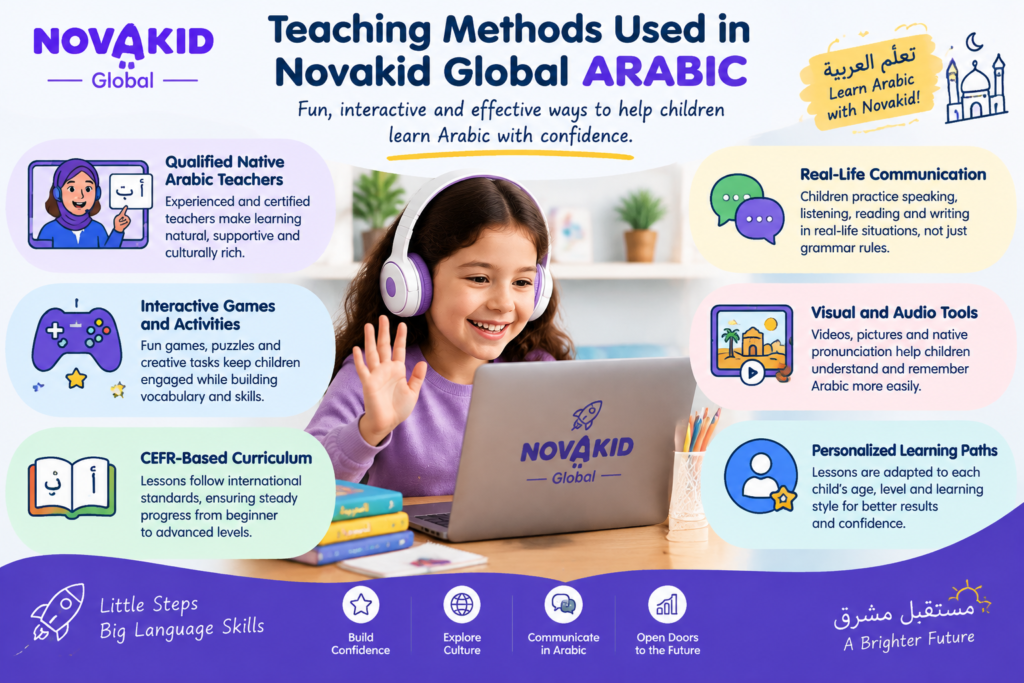
Teaching Methods Used in Novakid Global ARABIC
Gamification and Activity-Based Learning
One of the biggest challenges in children’s education is maintaining attention. Modern children are surrounded by entertainment, technology, and interactive content. A language lesson that feels outdated can quickly lose their interest.
Gamification solves this by adding elements of play to education. Instead of viewing learning as homework, children experience it as a challenge or adventure.
Online learning platforms often use:
- Rewards and achievement systems
- Interactive exercises
- Digital activities
- Visual storytelling
- Progress tracking
Novakid’s existing learning environment uses game-like elements and interactive activities to motivate children during lessons.
When children enjoy learning, they naturally spend more time practicing. This emotional connection can make language learning more successful.
Cultural Understanding Alongside Language Skills
Arabic is not only a language; it represents a wide range of cultures, traditions, and histories. A strong Arabic learning program should introduce children to cultural ideas while teaching vocabulary and communication.
For example, children can learn:
- Common Arabic greetings
- Traditional celebrations
- Everyday customs
- Stories from Arabic-speaking cultures
- Differences between Arabic-speaking regions
Culture makes language meaningful. When children understand the people and traditions behind a language, they develop deeper curiosity and motivation.
Benefits of Learning Arabic Through Novakid Global ARABIC
Building Communication Confidence
Many children understand a language before they feel confident speaking it. This is normal. A supportive learning environment helps children overcome hesitation.
Speaking practice is one of the most valuable parts of language education. Children need opportunities to make mistakes, receive corrections, and try again.
A personalized online lesson can provide a comfortable space where children are not afraid of being wrong. Over time, this builds confidence and encourages natural communication.
Flexible Learning From Home
One major advantage of online learning is flexibility. Parents can organize lessons around school schedules, family commitments, and other activities.
Instead of spending extra time traveling to a language center, children can join lessons from home. This makes regular practice easier.
However, parents should balance convenience with healthy screen habits. Online education should be part of a balanced routine that includes physical activity, reading, and social interaction.
How Parents Can Help Children Succeed With Online Arabic Lessons
Parents play an important role in language success. Even the best course needs support outside the classroom.
Simple activities can strengthen learning:
- Encourage children to repeat new words
- Watch Arabic children’s content together
- Practice basic phrases at home
- Celebrate small improvements
The goal is not pressure. Children learn better when they feel encouraged rather than forced.
Things Parents Should Consider Before Making a Decision
Internet Requirements and Screen Time Management
Before starting any online learning program, parents should check technical requirements. A reliable internet connection, suitable device, microphone, and quiet learning area are important.
Children also need guidance with screen time. Educational screen use is different from passive entertainment, but balance remains important.
Parents can improve the experience by:
- Creating a dedicated study space
- Setting a regular lesson schedule
- Staying nearby during early lessons
- Encouraging practice outside class
Cost, Schedule, and Long-Term Commitment
Language learning requires consistency. Parents should consider whether the program fits their budget and lifestyle.
A cheaper course with irregular attendance may produce weaker results than a consistent program that the child enjoys.
Before enrolling, compare:
Factor | Questions Parents Should Ask |
Pricing | Does it fit the family budget? |
Schedule | Are lesson times convenient? |
Teachers | Are instructors suitable for children? |
Progress | Can parents track improvement? |
Engagement | Will the child enjoy attending? |
Comparing Novakid Global ARABIC With Traditional Arabic Classes
Feature | Online Learning | Traditional Classes |
Location | Learn from home | Requires travel |
Teacher Access | Wider teacher availability | Limited by location |
Personal Attention | Often more personalized | Depends on class size |
Schedule | More flexible | Fixed timings |
Technology Use | Interactive digital tools | Usually classroom materials |
Both methods can work. The best choice depends on the child’s personality, family schedule, and learning goals.
Conclusion
Choosing an Arabic learning program for your child is an important decision that requires careful consideration. Novakid Global ARABIC offers an online learning approach designed around interactive education, personalized lessons, and child-friendly methods.
Before enrolling, parents should evaluate teacher quality, lesson style, technology needs, cost, and whether the program matches their child’s personality. Arabic learning can become a rewarding journey when children enjoy the process and feel motivated to participate.
The right program does not simply teach words and grammar. It helps children build curiosity, confidence, and a connection with another language and culture.
Read Also:
Top Reasons Small Businesses Are Considering MightyCall
The Ultimate Guide to Finding the Right Loop Earplugs
How Lenovo Argentina Helps Businesses Choose Better Technology
Everything Freelancers Should Know Before Choosing Kontist
Exploring the Benefits of Using JustAnswer for Expert Help
Why Best Buy U.S Remains Popular for Technology Shoppers
Frequently asked questions
The ideal age depends on the child’s learning ability and goals. Many children’s online language programs are designed for young learners and adapt lessons according to age and skill level.
Yes, beginner-friendly language programs typically start with basic vocabulary, pronunciation, and simple conversations before moving to advanced skills.
Online learning can be effective when lessons are interactive, teachers are engaging, and children practice consistently.
Parents can encourage practice by using simple Arabic phrases, exploring Arabic culture, and celebrating progress.
The best option depends on the child’s needs. Online lessons provide flexibility, while traditional classes may provide face-to-face group interaction.