
Modern workplaces are changing faster than ever. Remote work, hybrid schedules, AI-powered tools, and global teams have completely reshaped how employees communicate and complete tasks. Yet one thing remains constant across every successful organization: strong teamwork drives productivity. Companies that encourage collaboration are not only getting more work done, but they are also building healthier cultures, improving employee engagement, and increasing innovation. Recent workplace research in 2025 shows that organizations with effective collaboration practices experience higher employee satisfaction, lower burnout, and stronger operational performance.
Table of Contents
ToggleIntroduction to Teamwork and Productivity
Every company wants higher productivity, but many organizations focus only on individual performance. That approach often misses the bigger picture. Employees do not work in isolation anymore. Sales teams depend on marketing departments, customer support relies on product teams, and managers coordinate with employees across multiple locations and time zones. Without teamwork, even the most talented employees can become disconnected pieces of a puzzle that never fully comes together.
Understanding Workplace Collaboration
Workplace collaboration is much more than people sitting in the same meeting room or chatting in group messages. Real collaboration happens when employees actively share ideas, solve problems together, and align their efforts toward common goals. Effective teamwork requires communication, trust, accountability, and mutual respect. Without these elements, collaboration becomes shallow and unproductive.
One of the biggest misconceptions about teamwork is that it simply means dividing tasks among employees. True collaboration goes deeper. It involves combining strengths and perspectives to produce outcomes that individuals could not achieve alone. Think about software development teams. A programmer may write excellent code, but without designers, testers, and project managers, the final product may fail to meet user expectations. Collaboration transforms isolated expertise into complete solutions.
The Connection Between Teamwork and Productivity
Productivity increases dramatically when teams operate efficiently. Why? Because collaboration reduces duplication, speeds up problem-solving, and improves workflow coordination. Instead of employees wasting time figuring everything out independently, teams can share knowledge and divide responsibilities according to strengths. This allows projects to move faster while maintaining quality.
The Role of Shared Accountability
Shared accountability is one of the most powerful elements of effective teamwork. In collaborative workplaces, employees do not focus only on their personal responsibilities. They also feel responsible for the success of the entire team. This collective ownership encourages people to stay committed, reliable, and supportive throughout the project process.
When accountability is shared, employees become more motivated to meet deadlines and maintain high-quality work standards. No one wants to let the team down. This sense of responsibility creates stronger discipline and encourages employees to communicate openly about challenges before problems become serious. Teams that practice shared accountability often develop greater trust because members know they can depend on each other.
How Teams Complete Tasks Faster
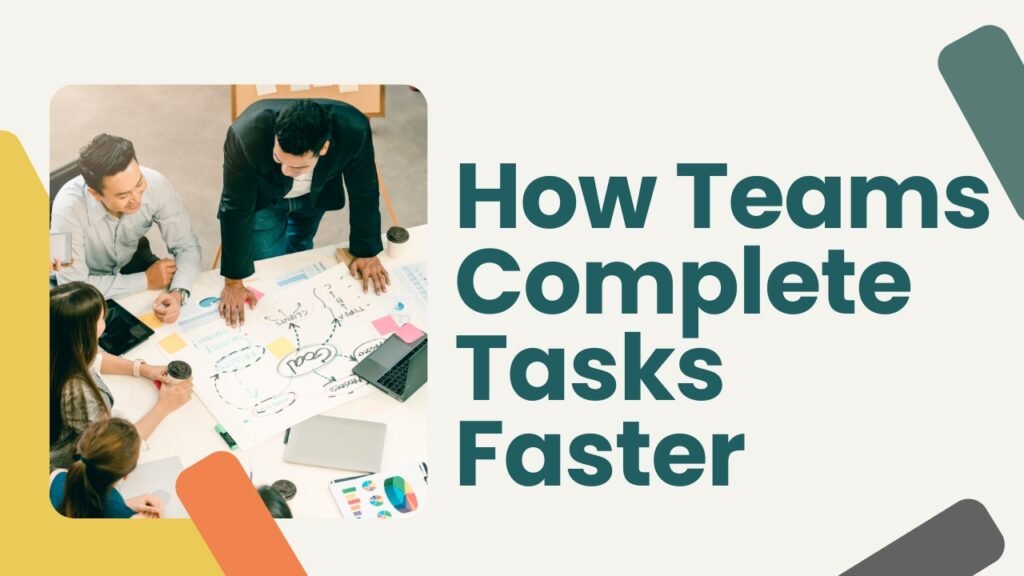
Teams complete tasks faster because work is divided according to each member’s strengths and expertise. Instead of one person handling every responsibility alone, different individuals focus on specific parts of a project simultaneously. This parallel workflow saves time and improves efficiency.
Communication as the Foundation of Teamwork
Communication is the engine that powers every successful team. Without clear communication, even highly skilled employees struggle to coordinate tasks effectively. Misunderstandings create delays, frustration, and unnecessary conflict. On the other hand, transparent communication builds trust, improves decision-making, and keeps everyone aligned with organizational goals.
Think about a football team during a championship match. Players constantly communicate through verbal instructions, body language, and strategic coordination. Without communication, the team would collapse into chaos regardless of individual talent. The workplace functions in a similar way. Employees need clarity about expectations, deadlines, responsibilities, and project updates to perform effectively together.
How Teamwork Encourages Innovation
Innovation rarely happens in isolation. Some of the world’s most successful ideas emerged because people combined different perspectives and experiences. Teamwork fuels creativity by allowing employees to challenge assumptions, build upon each other’s ideas, and discover solutions that individuals may never find alone.
Diverse teams are especially powerful because they bring varied viewpoints into discussions. A marketing specialist may see customer behavior differently than a software engineer or financial analyst. When these perspectives collide constructively, innovation becomes possible. Collaboration turns workplaces into idea laboratories where creativity grows through conversation and experimentation.
Employee Engagement and Team Collaboration
Employees who feel connected to their teams are far more engaged in their work. Engagement goes beyond simply showing up and completing tasks. Engaged employees care about company goals, contribute ideas willingly, and put extra effort into achieving results. Team collaboration strengthens engagement because it creates purpose, belonging, and emotional connection.
Teamwork in Remote and Hybrid Workplaces
Remote and hybrid work have completely changed the way teams collaborate. Employees now work from homes, coworking spaces, and offices spread across cities and countries. While this flexibility offers many benefits, it also creates new collaboration challenges. Teams can no longer rely solely on face-to-face interaction to maintain connection and productivity.
Technology has become the backbone of modern teamwork. Video conferencing, cloud-based project management, and instant messaging tools now allow employees to collaborate from virtually anywhere. Companies increasingly invest in collaboration software because digital communication has become essential for maintaining workflow continuity.
Leadership’s Role in Building Collaborative Teams
Leadership determines whether teamwork flourishes or fails inside an organization. Managers shape workplace culture through their communication style, decision-making approach, and daily interactions with employees. A leader who encourages collaboration creates an environment where employees feel comfortable sharing ideas and supporting one another.
Strong leaders act as facilitators rather than controllers. Instead of micromanaging every detail, they empower teams to solve problems collaboratively. This builds confidence and encourages employees to take ownership of their work. Teams become more agile because employees can respond quickly without waiting for constant approval.
Strategies to Improve Team Collaboration
Improving teamwork requires intentional effort. Collaboration does not magically appear simply because employees work together. Organizations must actively create systems, habits, and cultures that encourage teamwork.
One of the most effective strategies is establishing clear goals. Teams perform better when everyone understands objectives, deadlines, and individual responsibilities. Clarity reduces confusion and prevents employees from working against each other unintentionally.
Open feedback is equally important. Employees need safe opportunities to discuss concerns, suggest improvements, and resolve misunderstandings early. Constructive feedback prevents small issues from turning into major conflicts that damage team morale.
Why Teamwork Matters in Modern Workplaces
Teamwork has become one of the most important factors in the success of modern workplaces. Businesses today operate in fast-changing environments where employees must adapt quickly, solve complex problems, and manage multiple responsibilities at once. No single employee can handle every challenge alone. Teams allow organizations to combine different skills, experiences, and perspectives to achieve common goals more effectively. When employees collaborate, tasks become easier to manage, communication improves, and productivity increases across departments.
Definition of Effective Teamwork
Effective teamwork refers to the ability of a group of individuals to work together efficiently toward a shared goal while maintaining clear communication, mutual respect, and strong cooperation. It is not simply about employees working in the same department or participating in the same project. True teamwork happens when team members actively support one another, combine their strengths, and coordinate their efforts to achieve better results than they could individually.
Conclusion
Teamwork is no longer just a workplace buzzword. It is a fundamental driver of productivity, innovation, and employee satisfaction. Businesses that prioritize collaboration create environments where employees communicate effectively, solve problems faster, and feel genuinely connected to their work. In today’s rapidly evolving workplace, no company can afford disconnected teams and siloed communication.
Read Also:
Unlocking Wellness: How Your Super DE is Transforming the Superfood Industry
Weight Watchers Online: Achieve Your Health Goals with Personalized Weight Loss Programs
TicketNetwork: Your Go-To Marketplace for Concert, Sports, and Event Tickets
The Rise of Kontist: Smart Banking Solutions for Modern Professionals
Why Novakid Global ARABIC Is a Game-Changer in Digital Language Education
Frequently asked questions
Teamwork improves efficiency by dividing responsibilities, reducing duplication, and allowing employees to share knowledge and skills. Collaborative teams solve problems faster because multiple people contribute expertise and perspectives.
Communication ensures employees understand goals, responsibilities, and project updates clearly. Without communication, misunderstandings and delays become common, reducing productivity and damaging trust within teams.
Popular collaboration tools include Slack, Microsoft Teams, Zoom, Trello, Asana, and Google Workspace. These platforms help teams communicate, manage projects, and share information effectively.
Managers can improve teamwork by encouraging open communication, recognizing employee contributions, setting clear expectations, and creating environments where employees feel safe sharing ideas and feedback.
Yes. Strong teamwork provides emotional support, distributes workloads more evenly, and creates a sense of belonging. Research shows collaborative workplaces often experience lower burnout and higher employee satisfaction.