
CJdropshipping (US): Top Benefits for Shopify and WooCommerce Store Owners
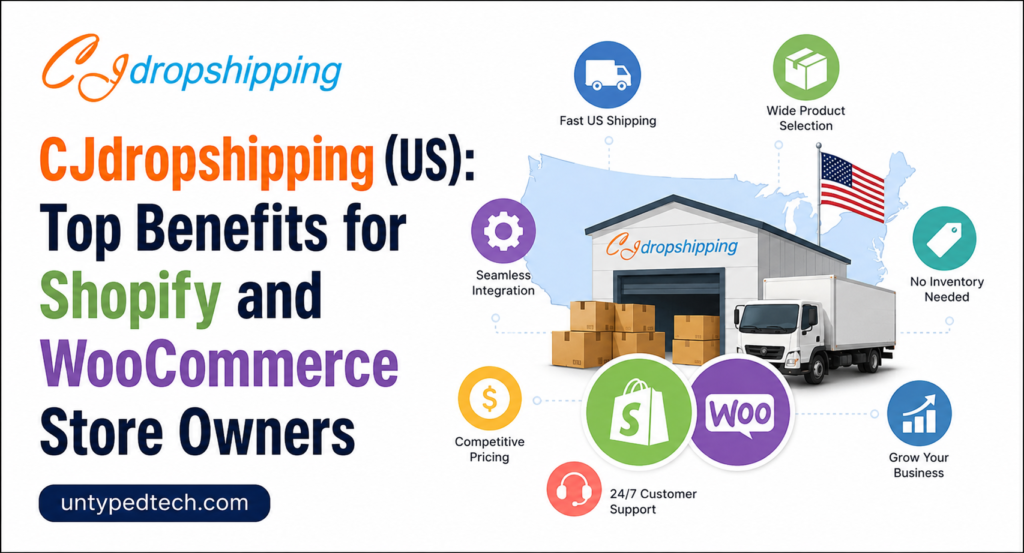
Discover the top benefits of CJdropshipping (US) for Shopify and WooCommerce store owners. Learn how faster US shipping, automated order fulfillment, product sourcing, inventory management, and branding services can help you grow your ecommerce business, improve customer satisfaction, and scale your online store efficiently. Understanding CJdropshipping in 2026 What Is CJdropshipping? The ecommerce landscape has changed dramatically over the last few years. Customers no longer accept long shipping times, inconsistent product quality, or poor communication. As a result, dropshipping businesses need suppliers that can provide reliable fulfillment, faster delivery, and scalable operations. CJdropshipping has emerged as one of the leading all-in-one dropshipping platforms that combines product sourcing, inventory management, order fulfillment, branding, and logistics under one roof. According to the company’s latest platform information, CJdropshipping operates a large global fulfillment network with more than 50 warehouses worldwide and provides integrations with major ecommerce platforms including Shopify and WooCommerce. Unlike traditional dropshipping models that rely solely on third-party marketplaces, CJdropshipping offers direct sourcing services and fulfillment support. This means store owners can request products, source custom items, and manage orders from a centralized dashboard. The platform is designed to simplify operations while helping businesses maintain competitive pricing and faster delivery times. For ecommerce entrepreneurs looking to build a sustainable business rather than simply test products, CJdropshipping offers a more structured and scalable solution. Why US-Based Fulfillment Matters One of the biggest challenges in ecommerce has always been shipping speed. Customers accustomed to rapid delivery services expect orders to arrive quickly. Long shipping times often result in abandoned carts, negative reviews, and refund requests. This is where CJdropshipping US warehouses become especially valuable. The company maintains multiple US warehouse locations that enable domestic shipping for American customers. Products stored in these warehouses can often be delivered within a few days rather than several weeks. Recent company resources indicate delivery times as fast as 2–5 days or 3–7 days for many warehouse-supported products. Think of US warehouses as local distribution hubs. Instead of sending products halfway around the world after every order, inventory is positioned closer to customers. This reduces transit times, improves customer satisfaction, and creates a shopping experience that feels more like purchasing from a domestic retailer. For Shopify and WooCommerce store owners targeting the US market, this advantage alone can significantly improve conversion rates and repeat purchases. How CJdropshipping Works with Shopify and WooCommerce Shopify Integration Features Shopify remains one of the most popular ecommerce platforms in the world because of its ease of use and powerful ecosystem. CJdropshipping offers a dedicated Shopify integration that allows merchants to connect their stores directly with the platform. Product imports, inventory synchronization, and order fulfillment can all be managed automatically. Imagine running a store where product listings, pricing updates, inventory levels, and shipping information are continuously synchronized without manual intervention. That’s the efficiency Shopify merchants gain from CJdropshipping. One-click product imports make it easier to test new products quickly, while automated order processing reduces administrative work. When customers place orders, fulfillment information can be transferred automatically to CJdropshipping for processing and shipment. This level of automation allows store owners to focus on marketing, customer acquisition, and brand growth instead of spending hours processing orders manually. For entrepreneurs managing multiple products or high order volumes, these efficiencies become increasingly valuable. WooCommerce Integration Features WooCommerce offers flexibility and control for WordPress users, but managing a growing store can become complicated without the right tools. CJdropshipping addresses this challenge through its dedicated WooCommerce plugin and integration features. The platform supports real-time product imports, automated inventory updates, and order synchronization directly from WooCommerce stores. One of the major benefits for WooCommerce users is maintaining complete ownership of their website while still gaining access to advanced fulfillment automation. Inventory changes are reflected automatically, helping reduce the risk of overselling products. Automated fulfillment workflows also streamline operations and minimize human error. For business owners who prefer WordPress flexibility but want enterprise-level fulfillment support, CJdropshipping bridges the gap effectively. The result is a smoother operational workflow and a better customer experience. Major Benefits of Using CJdropshipping (US) Faster Shipping Through US Warehouses Fast shipping is no longer a luxury; it’s a requirement. Customers expect rapid delivery regardless of whether a business is large or small. CJdropshipping’s US warehouse network helps merchants meet these expectations by positioning inventory closer to customers. Reports from the platform indicate delivery windows ranging from 2–5 days and 3–7 days for many US-based products. Faster shipping creates several benefits. First, it increases customer trust because buyers receive products quickly. Second, it lowers the number of support requests pertaining to shipping delays. Third, it can improve advertising performance because customers are more likely to purchase when delivery times are clearly communicated. The difference between a 5-day delivery and a 25-day delivery can dramatically impact customer satisfaction. Businesses that prioritize fulfillment speed often see higher repeat purchase rates and stronger brand loyalty. Product Sourcing Services Finding winning products can be one of the most time-consuming aspects of running a dropshipping business. CJdropshipping offers sourcing services that help merchants locate products even if they are not already listed on the platform. Sellers can take advantage of special inventory opportunities and possibly better supplier pricing thanks to this feature. Store owners can make sourcing requests immediately through the site, saving them numerous hours of searching through various markets. CJdropshipping’s sourcing team then works to identify manufacturers or suppliers capable of providing the requested products. This service can save significant time while helping businesses maintain competitive advantages. The sourcing feature is particularly useful for niche stores that require specialized products or entrepreneurs looking to differentiate themselves from competitors selling identical catalog items. Automated Order Fulfillment Automation is one of the strongest selling points of CJdropshipping. Once a store is connected, orders can flow automatically from Shopify or WooCommerce into the fulfillment system. Product packaging, shipping, and tracking updates can all be handled through integrated workflows. Manual order processing becomes increasingly difficult as sales volume grows. Automation reduces operational bottlenecks and
Top Features That Make Evaneos ES Popular Among Modern Travelers

Discover why Evaneos ES has become a favorite choice among modern travelers seeking personalized and authentic travel experiences. This article explores the top features of Evaneos ES, including tailor-made itineraries, direct access to local travel experts, sustainable tourism initiatives, transparent pricing, and unique cultural experiences. Learn how Evaneos ES helps travelers create unforgettable journeys while supporting local communities and responsible travel practices. Introduction Planning a trip today is about much more than simply booking flights and hotels. Modern travelers want personalized experiences, authentic cultural connections, and flexible itineraries that match their interests. This growing demand for customized travel solutions has made Evaneos ES a popular choice among travelers worldwide. By connecting users directly with local travel experts, Evaneos ES offers unique, tailor-made journeys that go beyond traditional package tours. Whether you’re looking for hidden destinations, sustainable travel options, or expert local guidance, Evaneos ES provides a smarter and more personalized way to explore the world. In this article, we’ll explore the top features that make Evaneos ES stand out in the competitive travel industry and why so many modern travelers trust the platform to create unforgettable travel experiences. Understanding the Rise of Personalized Travel Travel has changed dramatically over the last decade. Gone are the days when travelers were satisfied with rigid package holidays that offered little flexibility. Modern travelers want something different. They want experiences that reflect their interests, travel style, and personal preferences. Whether it is exploring hidden villages in Spain, discovering local food markets in Asia, or hiking through remote mountain trails, people increasingly seek journeys that feel unique rather than mass-produced. The rise of digital travel platforms has accelerated this shift. Travelers now have access to more information than ever before, making them more confident in planning customized experiences. At the same time, sustainability and cultural authenticity have become major priorities. People want to know where their money goes, who benefits from their visit, and how they can travel responsibly. This shift has created an ideal environment for platforms like Evaneos ES, which focus on tailor-made travel experiences designed by local experts. By combining technology with local knowledge, Evaneos has positioned itself as a trusted solution for travelers seeking meaningful adventures. Why Traditional Package Tours Are Losing Appeal Traditional tour packages often follow fixed schedules and standardized itineraries. While convenient, they rarely provide the flexibility many travelers crave today. Visitors may spend hours at tourist hotspots while missing hidden gems known only to locals. This one-size-fits-all approach often leaves travelers feeling disconnected from the destination. Modern tourists prefer experiences that allow them to immerse themselves in local culture. They want freedom to choose activities, adjust schedules, and explore beyond crowded attractions. Personalized travel planning helps achieve these goals while offering greater control over budgets and preferences. The Growing Demand for Authentic Experiences Authenticity has become one of the most valuable currencies in the travel industry. Travelers increasingly seek opportunities to interact with local communities, learn regional traditions, and participate in experiences that cannot be replicated elsewhere. This trend explains why platforms focused on local expertise continue to grow in popularity. What Is Evaneos ES? Evaneos ES is the Spanish version of the global Evaneos travel platform, which connects travelers directly with carefully selected local travel agencies worldwide. Founded in 2009, the company was built around a simple but powerful idea: travelers should be able to work directly with destination experts who truly understand their regions. Unlike traditional travel agencies that operate through multiple intermediaries, Evaneos creates a direct connection between travelers and local professionals. These experts help design customized itineraries based on personal interests, travel goals, budgets, and schedules. The result is a more personalized and authentic travel experience that reflects individual preferences rather than generic tourism packages. The Platform’s Mission and Vision Evaneos promotes a vision of travel that is local, sustainable, and personalized. The company emphasizes meaningful experiences while encouraging travelers to make responsible choices that benefit local communities and reduce environmental impact. How Evaneos Connects Travelers with Local Experts The platform acts as a marketplace where travelers submit their travel ideas and receive customized proposals from local agencies. These agencies provide expert recommendations, itinerary adjustments, accommodation suggestions, and activity planning based on first-hand destination knowledge. Top Features That Make Evaneos ES Stand Out 100% Tailor-Made Travel Planning One of the strongest features of Evaneos ES is its commitment to fully customized travel planning. Instead of selecting from pre-designed packages, travelers collaborate directly with local experts to create itineraries tailored to their interests. Whether someone dreams of a food-focused journey through Italy or a wildlife adventure in Africa, every aspect can be personalized. Direct Access to Local Travel Agencies Evaneos eliminates unnecessary intermediaries by connecting travelers directly with local agencies. This direct communication creates a more collaborative planning process and ensures that travelers receive destination-specific insights from professionals who live and work in the region. Local experts often recommend hidden attractions, authentic restaurants, and cultural experiences that traditional tour operators may overlook. This insider knowledge can transform a good trip into an unforgettable one. Sustainable and Responsible Tourism Focus Sustainability is one of the defining characteristics of Evaneos ES. The platform actively promotes responsible tourism practices, including off-season travel, community-led experiences, slow travel, and lower-carbon itineraries. Travelers are increasingly concerned about the environmental and social impact of tourism. Evaneos responds to these concerns by encouraging longer stays, supporting local businesses, and promoting experiences that respect local cultures and ecosystems. This approach aligns closely with modern travel values. Transparent Pricing Without Middlemen Price transparency is another major advantage. Because travelers communicate directly with local agencies, unnecessary intermediary costs are reduced. This often results in better value while maintaining high-quality travel experiences. Travelers appreciate knowing exactly what they are paying for. Clear pricing structures help build trust and reduce the uncertainty that sometimes accompanies travel bookings. Secure Online Payment System Security is essential when booking international travel. Evaneos provides a secure payment system that allows travelers to complete transactions with confidence. The platform facilitates payments
Why Businesses Are Choosing B12 (US) for Website and Marketing Solutions
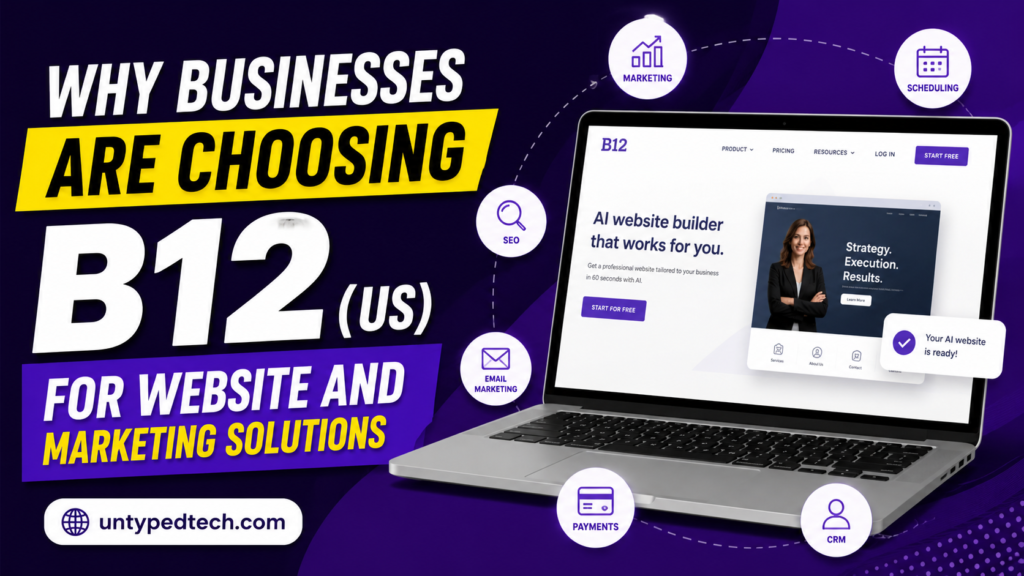
Businesses need more than just a website to be successful online in today’s cutthroat digital environment. They require a complete solution that combines website creation, search engine optimization (SEO), customer management, marketing automation, appointment scheduling, and payment processing. Managing multiple tools and platforms can be time-consuming and expensive, especially for small businesses and growing companies. This is where B12 (US) has emerged as a popular choice among entrepreneurs, consultants, agencies, and service-based businesses. By combining AI-powered website building with integrated marketing and business management tools, B12 helps organizations establish a professional online presence quickly and efficiently. Instead of juggling several software solutions, businesses can manage their websites, customer interactions, marketing campaigns, and operations from a single platform. Introduction Discover why B12 (US) is becoming a popular choice for businesses seeking an all-in-one website and marketing solution. This article explores how B12 (US) combines AI-powered website creation, SEO tools, email marketing, scheduling, invoicing, and CRM features to help businesses build a strong online presence, attract more customers, and streamline operations efficiently. The Digital Transformation Challenge Businesses today face a reality that would have seemed overwhelming a decade ago. A company no longer needs only a website. It also needs search engine visibility, lead generation systems, appointment scheduling, customer communication tools, email marketing, analytics, and payment processing capabilities. Managing all these separate tools can become expensive and time-consuming, especially for startups and small businesses with limited resources. Many business owners find themselves juggling multiple subscriptions, learning different software interfaces, and troubleshooting compatibility issues between platforms. This creates unnecessary complexity that takes attention away from the core mission of growing the business. As competition increases across industries, organizations are actively searching for streamlined solutions that can reduce operational friction while maintaining professional quality. This shift has fueled the demand for integrated platforms that combine website management and marketing functionality under one roof. What Is B12 and How Does It Work? AI-Powered Website Creation B12 is an AI-driven website builder designed primarily for professionals, service providers, entrepreneurs, and small businesses. The platform uses artificial intelligence to generate a customized website draft based on a simple description of the business. Users can provide information about their services, goals, and target audience, and the system automatically creates pages, layouts, and content suggestions. This approach significantly reduces the time traditionally required to build a website. Rather than starting with a blank canvas, users begin with a functional website draft that can be customized according to their preferences. The process is especially attractive to business owners who lack technical skills or web design experience. Human-Assisted Customization One aspect that differentiates B12 from some AI-only competitors is its combination of automation and expert support. The platform has positioned itself as a blend of AI efficiency and human expertise. This hybrid model helps businesses achieve a balance between speed and quality. The result is a website creation experience that feels less like using a generic template and more like working with a digital partner. AI-generated speed is advantageous to businesses, but they still have the freedom to modify branding, marketing, and design components to meet their own identities. Why Businesses Want Simplicity Think of modern business technology like a toolbox. Having twenty separate tools scattered around the room can slow you down, while having a well-organized toolkit helps you work faster and more efficiently. Businesses are increasingly favoring platforms that eliminate the need for multiple vendors and disconnected systems. B12 addresses this need by combining website creation with business growth tools such as SEO, scheduling, invoicing, email marketing, and customer management. Instead of spending weeks assembling a technology stack, companies can begin operating from a single ecosystem almost immediately. This convenience has become one of the major reasons businesses are exploring B12 as an alternative to traditional website development approaches. Key Features Driving B12’s Popularity AI Website Builder The cornerstone of B12’s offering is its AI website builder. Businesses can generate a professional website in approximately 60 seconds by describing their company and objectives. The platform creates relevant pages, content structures, and layouts automatically. This capability can dramatically shorten website launch timelines. Traditional website projects often require weeks or months of planning, design revisions, and development work. B12 condenses much of this process into minutes, helping businesses establish an online presence rapidly. Built-In SEO Tools For online exposure, search engine optimization is still crucial. Without SEO, even the most attractive website can struggle to attract visitors. B12 incorporates SEO-focused features designed to help businesses improve discoverability and maintain long-term visibility in search results. For small businesses that may not have dedicated SEO specialists, these built-in tools provide a valuable starting point. They help ensure websites are structured in a way that supports search engine indexing and organic traffic growth. Scheduling and Appointment Management Service-based businesses often rely on appointments and consultations. B12 integrates scheduling functionality directly into websites, enabling customers to book appointments without leaving the platform. This seamless experience improves customer convenience while reducing administrative workload. Businesses can automate appointment booking and focus more on delivering services rather than managing schedules manually. Email Marketing Capabilities Email marketing continues to deliver one of the highest returns on investment among digital marketing channels. B12 includes email marketing tools that help businesses nurture leads, communicate with customers, and promote services effectively. By integrating email marketing directly into the platform, businesses can manage communication campaigns without relying on multiple third-party applications. How B12 Helps Small Businesses Compete Online Faster Website Launches Speed matters in business. A delayed website launch can mean lost opportunities, reduced visibility, and slower revenue growth. B12’s AI-driven approach allows businesses to move from concept to launch significantly faster than traditional development methods. For startups and entrepreneurs, this speed advantage can be transformative. Instead of waiting months to establish an online presence, they can begin attracting customers almost immediately. The ability to launch quickly also allows businesses to test ideas, gather feedback, and make improvements in real time. Professional Branding Consumers often judge a business within seconds of visiting
SimpliSafe Home Security vs Competitors: Which Security System Wins?

The home security industry has evolved significantly over the past decade, introducing smarter technologies, advanced monitoring solutions, and greater convenience for homeowners. The days when homeowners relied solely on loud alarms and long-term contracts are fading away. Today, consumers want smart cameras, mobile app control, AI-powered monitoring, and flexible pricing plans. As a result, the competition among security companies has become fierce. Among all the available options, SimpliSafe continues to attract attention because of its affordable pricing, DIY installation, and contract-free approach. However, is SimpliSafe the greatest choice in 2026? Or do competitors like ADT, Vivint, Ring Alarm, and Frontpoint offer a better overall experience? That question becomes important when you’re investing hundreds of dollars to protect your family, property, and peace of mind. A security system isn’t just another gadget. It takes on the role of your home’s silent protector, operating around the clock, seven days a week. Introduction Home security is no longer a luxury—it’s a necessity. With smart technology transforming how homeowners protect their properties, choosing the right security system has become more important than ever. Among the many options available today, SimpliSafe has earned a strong reputation for its affordable pricing, DIY installation, and flexible monitoring plans. But how does it compare to industry giants like ADT, Ring Alarm, Vivint, and Frontpoint? Each security provider offers a unique mix of features, pricing, smart home integrations, and professional monitoring services. While some systems focus on advanced automation and professional installation, others prioritize affordability and ease of use. This makes selecting the best home security system a challenging decision for homeowners, renters, and families looking for reliable protection. Why Home Security Systems Matter More Than Ever in 2026 The modern home has become more connected than ever before. Smart locks, video doorbells, voice assistants, connected thermostats, and remote-controlled lighting systems are now common in millions of households. While these innovations create convenience, they also introduce new security concerns. Homeowners are looking for systems that not only prevent break-ins but also monitor packages, detect fires, identify water leaks, and provide emergency assistance. Security experts note that modern alarm systems are no longer just sirens attached to doors and windows. Today’s systems operate more like intelligent safety networks that combine sensors, cameras, AI detection, and professional monitoring services. Understanding SimpliSafe Home Security Key Features of SimpliSafe SimpliSafe has built its reputation around simplicity. As the name suggests, the company focuses on making home protection easy for average homeowners and renters. The system includes entry sensors, motion detectors, glass-break sensors, cameras, panic buttons, and environmental sensors that detect smoke, floods, and temperature changes. One of SimpliSafe’s biggest strengths is its DIY installation process. Most users can complete setup in less than an hour without hiring a technician. This approach eliminates costly installation fees while giving homeowners complete control over device placement. Security testing organizations consistently praise SimpliSafe’s intrusion detection capabilities. Recent evaluations ranked SimpliSafe as one of the best systems for deterring burglars because of its advanced monitoring features and proactive response options. SimpliSafe Pricing and Monitoring Plans Pricing remains one of SimpliSafe’s strongest selling points. Professional monitoring starts around $22.99 per month, while equipment packages generally begin around $250 depending on configuration. The lack of mandatory contracts makes SimpliSafe especially appealing. Customers can cancel service without worrying about termination fees. Compare that with traditional security companies that often require multi-year commitments, and it’s easy to see why budget-conscious buyers gravitate toward SimpliSafe. SimpliSafe vs ADT ADT is often considered the giant of the security industry. With more than a century of experience, it remains one of the most recognized names in home protection. Industry experts continue ranking ADT as the leader for professional monitoring and installation services. When comparing installation, ADT and SimpliSafe take opposite approaches. ADT traditionally relies on professional technicians who design and install the system. SimpliSafe, on the other hand, emphasizes self-installation. Homeowners who enjoy a hands-on experience often prefer SimpliSafe, while those who want a completely managed setup may lean toward ADT. Monitoring is where ADT shines. Security.org testing found ADT’s monitoring centers achieved average response times around 28 seconds, slightly faster than Vivint and many competitors. This rapid response capability can make a meaningful difference during emergencies. SimpliSafe vs Ring Alarm This comparison may be the most relevant for modern homeowners because both companies target similar audiences. They appeal to budget-conscious consumers who want DIY installation, app-based controls, and flexible monitoring. Ring’s greatest advantage lies in its camera ecosystem. The company offers a massive selection of video doorbells, floodlight cameras, indoor cameras, and outdoor surveillance devices. Security reviewers consistently recognize Ring as one of the strongest choices for video-based security. SimpliSafe approaches security differently. Rather than focusing primarily on cameras, it emphasizes complete intrusion detection through sensors and monitoring technology. Security experts note that SimpliSafe’s sensors are often regarded as more reliable for intrusion detection, while Ring excels in visual surveillance. Price is another important factor. Ring generally offers lower monthly monitoring costs, making it attractive for camera-heavy households. However, SimpliSafe includes more advanced alarm-focused features in its standard monitoring packages. SimpliSafe vs Vivint Vivint occupies the premium end of the security market. While SimpliSafe focuses on affordability and simplicity, Vivint focuses on luxury and automation. The biggest difference appears in smart-home functionality. Vivint supports advanced automation rules, smart thermostats, smart locks, lighting systems, and extensive device integrations. Industry reviewers frequently rank Vivint as one of the strongest smart-home platforms available. SimpliSafe offers basic integrations with platforms like Alexa and Google Assistant, but its automation capabilities remain limited compared to Vivint. Homeowners who dream of creating a fully connected smart home may find Vivint’s ecosystem more attractive. SimpliSafe vs Frontpoint Frontpoint often flies under the radar compared to larger competitors, but it has developed a loyal customer base thanks to its reputation for customer service and support. Both Frontpoint and SimpliSafe embrace DIY installation. This makes them natural competitors for homeowners who want professional-grade protection without scheduling installation appointments. Industry rankings consistently place Frontpoint
How Paysend Makes Global Money Transfers Fast and Affordable

Discover how Paysend makes global money transfers fast, affordable, and convenient. Learn about its low fees, quick delivery times, secure payment network, and international coverage that help individuals and businesses send money across borders with ease. Introduction In today’s connected world, sending money across borders has become a necessity for families, freelancers, students, and businesses. However, traditional international money transfer services often come with high fees, slow processing times, and complicated procedures. That’s where Paysend stands out. As a modern global payment platform, Paysend offers a faster, more affordable, and user-friendly way to transfer money internationally. With support for multiple countries, competitive exchange rates, and convenient transfer options, Paysend is helping millions of users move money quickly and securely. In this article, we’ll explore how Paysend makes global money transfers fast and affordable, along with the key features that have made it a popular choice worldwide. The Growing Need for Faster International Money Transfers The world has become more connected than ever before. Families live across continents, businesses hire remote workers from different countries, and students travel abroad for education and career opportunities. In this global environment, sending money internationally is no longer an occasional activity. For millions of people, it is part of everyday life. Whether someone is supporting family members back home, paying tuition fees, or settling invoices with overseas clients, they need a transfer service that is both fast and affordable. Why Traditional Bank Transfers Frustrate Users Anyone who has ever sent money internationally through a traditional bank understands the common frustrations. Transfers often involve multiple correspondent banks, each potentially charging additional fees. The sender may not know exactly how much money the recipient will receive until the transfer is completed. These uncertainties make financial planning difficult. Another challenge is processing time. Many international bank transfers require two to five business days, and sometimes even longer when weekends or public holidays are involved. For people dealing with emergencies or urgent payments, such delays can be stressful. Imagine a student abroad needing immediate financial support or a family facing an unexpected medical expense. Waiting several days simply is not practical. Why Digital Remittance Platforms Are Growing The growth of smartphones and mobile banking has accelerated the adoption of digital money transfer platforms. Users can now send money from virtually anywhere without visiting a bank branch. A few taps on a mobile app can complete a transaction that once required paperwork and lengthy verification processes. Digital platforms also prioritize user experience. They provide clear fee structures, real-time exchange rates, and transfer tracking features. Customers can monitor their money from the moment it leaves their account until it reaches the recipient. This level of visibility creates trust and confidence. What Is Paysend and How Does It Work? A Quick Introduction to Paysend Paysend is a financial technology company specializing in international money transfers. Founded in the United Kingdom, the platform was created with a clear mission: make cross-border payments simple, fast, and affordable. Instead of forcing users through complicated banking procedures, Paysend allows them to send money using a smartphone or computer in just a few steps. The service supports several transfer methods, including card-to-card transfers, bank account deposits, and mobile wallet payments. This flexibility is one of the reasons why Paysend has become attractive to users across different countries and financial systems. Depending on the destination, recipients can receive funds directly into their bank account, payment card, or supported digital wallet. Countries and Regions Covered by Paysend Global reach is a crucial factor when choosing a money transfer service. A platform may offer excellent pricing, but it loses value if it cannot send money to the destinations users need. Paysend has expanded aggressively and now supports transfers to more than 170 countries worldwide. This extensive coverage includes major remittance corridors such as India, the Philippines, Pakistan, Nigeria, Mexico, and numerous European countries. The broad network allows migrant workers, international students, and business professionals to transfer money across borders with ease. Paysend continues to expand its services and payment partnerships to improve accessibility in different regions. Why Paysend Is Considered Fast Instant and Near-Instant Transfer Technology Speed is one of Paysend’s biggest selling points. In today’s world, people expect services to operate in real time. Waiting days for money to arrive feels outdated when digital technology can process transactions almost instantly. Paysend addresses this expectation by leveraging modern payment networks and streamlined processing systems. According to company information, more than 95% of transfers arrive within minutes on supported routes. This is a significant advantage compared to traditional bank transfers that may require multiple business days. For users sending emergency funds or making urgent payments, this speed can make a meaningful difference. Multiple Delivery Methods for Recipients Another factor contributing to Paysend’s speed is its variety of payout options. Recipients can receive money through methods that best suit their location and financial situation. Depending on the country, funds can be delivered to bank cards, bank accounts, mobile wallets, or even cash pickup services. This flexibility eliminates unnecessary delays. Instead of forcing every recipient to use the same method, Paysend adapts to local payment infrastructure. For example, a recipient in one country may receive money directly on a Visa card, while another may receive funds through a mobile wallet. By supporting local preferences, the platform improves both convenience and delivery speed. How Paysend Keeps International Transfers Affordable Fixed Transfer Fees Explained Cost is often the deciding factor when choosing a money transfer service. Many traditional providers charge a percentage-based fee, meaning costs increase as transfer amounts grow. Paysend takes a different approach by using fixed transfer fees on many routes. This model makes pricing easier to understand and predict. For users who send money regularly, predictable fees are extremely valuable. Instead of calculating complex percentages and hidden charges, they know upfront what the transfer will cost. Paysend frequently advertises fees as low as $1.99, £1, or similar fixed amounts depending on the transfer corridor and payment method. Transparent Exchange Rates and
Top Features of Bubble Every Startup Founder Should Know

The startup world moves at breakneck speed. One day you’re sketching your app idea on a napkin, and the next day your competitor is already testing a beta version. That’s exactly why no-code development platforms like Bubble have become a secret weapon for founders who want to launch faster without hiring a massive engineering team. Bubble has evolved far beyond being “just another no-code builder.” In 2026, it’s widely used for SaaS products, marketplaces, CRMs, AI-powered platforms, and internal tools. Recent reports show millions of apps have already been built using Bubble’s ecosystem. Why Bubble Has Become a Favorite Among Startup Founders Startup founders often face the same painful dilemma: spend months building an MVP with developers or risk launching late while competitors gain momentum. Bubble changes that equation dramatically. Instead of requiring deep coding knowledge, it allows founders to visually create applications while still offering serious functionality. That’s a huge shift in how software products are launched today. According to recent Bubble ecosystem data, the platform powers millions of applications and billions of yearly page views. Visual Drag-and-Drop Editor The drag-and-drop editor is probably the first thing most founders notice when opening Bubble. Instead of writing HTML, CSS, or JavaScript, users visually place elements on pages and customize them directly. Buttons, forms, repeating groups, images, navigation bars, and workflows can all be assembled visually. What makes Bubble’s editor powerful is that the visual layer is deeply connected to functionality. In many website builders, design exists separately from logic. Bubble combines them together. A button isn’t just a design object; it can trigger workflows, connect to databases, process payments, send emails, or launch API calls instantly. This fusion of frontend and backend functionality allows founders to experiment rapidly with product ideas. Built-In Database Management One of Bubble’s strongest features is its integrated database system. Unlike simple website builders that rely heavily on external tools, Bubble includes a native relational database that stores and manages application data directly inside the platform. For founders, this eliminates the headache of configuring separate backend infrastructures during the MVP phase. Powerful Workflow Automation Workflows are the beating heart of Bubble applications. They control how apps behave when users interact with them. Instead of writing backend code, founders visually create logical sequences triggered by actions like button clicks, form submissions, or database changes. It’s essentially programming without syntax. For example, imagine a user signing up for a startup’s SaaS platform. In Bubble, one workflow can instantly create the user account, send a welcome email, assign a subscription plan, generate onboarding tasks, and notify the admin team simultaneously. No backend engineer required. That level of automation is why Bubble appeals strongly to founders building operationally complex businesses. Bubble AI Features Bubble has aggressively embraced AI-powered development in 2026, making the platform even more attractive for founders who want to move fast. One of the most exciting additions is Bubble’s AI app generator, which allows users to generate functional application structures from prompts. Instead of starting from a blank canvas, founders can describe the type of app they want, and Bubble automatically creates layouts, backend structures, workflows, and suggested features. This dramatically reduces setup time for MVPs. Imagine describing your dream office to an architect and instantly receiving a near-finished blueprint. That’s essentially what Bubble AI does for app development. API Integrations and Plugin Ecosystem Modern startups rarely operate in isolation. Businesses depend on payment processors, CRMs, analytics platforms, communication systems, and AI services. Bubble understands this reality extremely well. Its API integration capabilities are one of the platform’s strongest competitive advantages. Bubble supports connections with external services like Stripe, OpenAI, Google Maps, Segment, and countless other APIs.This means founders can extend their apps far beyond Bubble’s native capabilities without custom backend engineering. Native Mobile App Development One major criticism Bubble faced in earlier years was limited native mobile support. That’s changing rapidly. Bubble now includes native mobile development capabilities, allowing founders to build apps for both iOS and Android directly from the platform. This feature is huge for startups because maintaining separate web and mobile codebases traditionally requires large engineering resources. Bubble simplifies that by offering a unified development environment. Founders can design experiences once and adapt them across devices. Collaboration and Version Control As startups grow, collaboration becomes critical. Bubble includes version control and branching features that allow teams to work safely without breaking production apps. This is particularly important for startups where rapid iteration and experimentation are constant. Join Now Security and Hosting Infrastructure Security often becomes an afterthought for early-stage startups, but Bubble includes several built-in protections that help founders avoid dangerous mistakes. According to Bubble’s documentation, the platform includes encryption, privacy controls, hosting infrastructure, and compliance support directly out of the box. Bubble supports TLS encryption during data transmission and AES-256 encryption for stored data. The platform is also SOC 2 Type II compliant and aligns with GDPR standards, which matters for startups handling sensitive customer information. Performance, Limitations, and Scalability Bubble is powerful, but it isn’t magic. Startup founders should understand both its strengths and limitations before committing fully. The platform excels at MVPs, SaaS products, marketplaces, dashboards, internal tools, and workflow-heavy applications. The biggest advantage is speed. Founders consistently report shipping features in days instead of weeks.That rapid iteration cycle can mean survival in highly competitive markets where being first matters more than having perfect infrastructure. Bubble Pricing and Cost Efficiency Cost efficiency is one of Bubble’s biggest selling points for startups. Traditional software development can easily consume tens of thousands of dollars before a product even launches. Bubble dramatically lowers that entry barrier. The platform offers a free tier for testing and prototyping, while paid plans scale based on usage and features.For many founders, this pricing structure feels far more accessible than hiring full engineering teams immediately. The real savings come from compressed timelines. A founder using Bubble can validate an idea in weeks instead of spending months coordinating developers, backend engineers, designers, and DevOps specialists. Faster validation means
Why Businesses Choose 10Web for Faster Website Development
Modern businesses move fast. Customers expect websites to load instantly, look professional on every device, and deliver a seamless user experience from the very first click. At the same time, companies are under pressure to launch websites quickly without burning through massive budgets or waiting months for developers to finish the job. That’s exactly why platforms like 10Web are becoming increasingly popular among startups, agencies, freelancers, and established businesses alike. According to recent platform data, more than 2 million websites have already been created using 10Web’s AI-powered ecosystem. Businesses are turning toward AI website builders not just because they’re trendy, but because they solve real-world problems: speed, scalability, automation, performance, and cost efficiency. Traditional website development often feels like building a skyscraper brick by brick. 10Web changes the game by using AI to assemble most of the structure automatically while still giving businesses full control over customization and ownership. The Increasing Need for Quicker Website Development Businesses today operate in a hyper-competitive digital world where speed often determines success. Imagine launching a new product campaign but waiting six weeks for a landing page to go live. By the time the site is ready, the opportunity may already be gone. That’s why faster website development is no longer a luxury; it’s a business necessity. Companies want websites that can be created, edited, optimized, and launched rapidly without sacrificing quality or performance. Traditional development workflows can be painfully slow. A standard web project often involves designers, frontend developers, backend developers, copywriters, SEO specialists, QA teams, and hosting engineers. Every revision creates delays. Every change request increases costs. Small businesses and startups especially struggle with these challenges because they don’t always have the resources to maintain a full-scale development team. In many cases, entrepreneurs spend more time coordinating website projects than actually growing their businesses. What Is 10Web? 10Web is an AI-powered website building and hosting platform focused primarily on WordPress websites. The platform combines artificial intelligence, website hosting, optimization tools, and drag-and-drop editing into a unified ecosystem. Rather than forcing businesses to piece together multiple services from different providers, 10Web attempts to centralize the entire workflow. One of the reasons businesses gravitate toward 10Web is its balance between automation and flexibility. Some AI website builders are incredibly easy to use but restrictive when it comes to ownership or customization. Others offer flexibility but require technical expertise. 10Web bridges this gap by providing AI-assisted website generation while maintaining the openness of WordPress. Businesses keep full ownership of their sites, plugins, and content. Why WordPress Users Prefer 10Web WordPress powers a massive portion of the internet because it offers flexibility, plugin support, and ownership. Businesses love WordPress, but they often hate the complexity that comes with setting it up properly. That’s where 10Web creates a strong advantage. AI Website Generation Changes Everything The biggest reason businesses choose 10Web is simple: speed. Traditional website projects often take weeks or months. With 10Web, a fully functional WordPress website can reportedly be generated in under three minutes. That kind of acceleration fundamentally changes how companies approach digital projects. Think about the difference between writing a book by hand versus using predictive AI assistance. The writer still guides the process, but the heavy lifting becomes dramatically faster. That’s essentially how 10Web’s AI website generation works. The platform automates repetitive development tasks while still giving users control over the final result. The AI builder handles several critical areas simultaneously: Feature Traditional Process 10Web AI Process Website Structure Manual wireframing AI-generated sitemap Content Creation Human copywriting AI-generated text Design Layout Custom design work Automated responsive layouts Hosting Setup Separate configuration Integrated managed hosting SEO Preparation Manual optimization Built-in optimization tools Performance and Speed Optimization Research consistently shows that slow websites increase bounce rates and reduce customer satisfaction. Businesses know this, which is why performance optimization has become a top priority. 10Web for Agencies and Freelancers Agencies and freelancers face unique challenges in website development. They need to deliver projects quickly, manage multiple clients simultaneously, and maintain profitability without sacrificing quality. 10Web offers several features specifically designed for these workflows. One standout capability is white-label functionality. Agencies can brand the dashboard, notifications, domains, and user experiences with their own company identity. This allows agencies to present a more professional and cohesive experience to clients while leveraging 10Web’s backend infrastructure. Ecommerce Development Made Faster Ecommerce businesses operate in one of the fastest-moving digital environments imaginable. Product launches, seasonal campaigns, and marketing experiments happen constantly. Waiting weeks for development updates can seriously impact revenue opportunities. 10Web integrates directly with WooCommerce, enabling businesses to create ecommerce websites with AI assistance. This includes product pages, checkout systems, payment integrations, and responsive store layouts. Instead of manually configuring ecommerce infrastructure piece by piece, businesses can generate much of the store automatically. AI can assist with layouts, product structures, and even content generation. For entrepreneurs launching new online stores, this dramatically lowers the technical barrier. Real Business Benefits of Using 10Web At the end of the day, businesses care about results. Fancy AI features don’t matter unless they create tangible advantages. The reason companies choose 10Web ultimately comes down to practical business outcomes. Join Now Comparing 10Web With Other AI Website Builders Platforms like Wix, Hostinger, Squarespace, Framer, and Durable all compete for attention. So why do many businesses still choose 10Web? One key difference is ownership and flexibility. Many AI website builders prioritize simplicity but limit backend access and customization. 10Web, on the other hand, combines AI automation with the open architecture of WordPress. Here’s a simplified comparison: Platform Strength Limitation 10Web WordPress flexibility + AI Learning curve for advanced features Wix Beginner-friendly Limited backend flexibility Hostinger AI Affordable Less customization depth Squarespace Beautiful templates Limited plugin ecosystem Framer Design-focused Less traditional CMS flexibility Conclusion Website development is evolving rapidly, and AI-powered platforms are reshaping how businesses build their online presence. 10Web stands out because it combines AI automation, WordPress flexibility, managed hosting, ecommerce support, and performance optimization into one ecosystem. Instead of forcing businesses
Flatlogic Marketplace: Best Platform for Ready-Made Web Apps?

The demand for ready-made web applications has exploded over the last few years. Startups want to launch faster, agencies want reusable codebases, and solo founders are tired of building authentication systems, dashboards, APIs, and admin panels from scratch every single time. That’s exactly where Flatlogic Marketplace enters the picture. It promises to help developers and businesses generate full-stack web applications in minutes instead of months. What Is Flatlogic Marketplace? Flatlogic Marketplace is an AI-powered platform designed to generate full-stack web applications quickly using modern development frameworks. Instead of manually building every feature from zero, users can start with templates, generators, and pre-configured application structures. Think of it like getting the skeleton, muscles, and nervous system of a web app already assembled before you even write custom business logic. How the Platform Works Flatlogic simplifies development into a relatively straightforward process. Users choose a template or define requirements using prompts, then the platform generates the frontend, backend, database structure, APIs, authentication systems, and deployment-ready architecture. The generated app can then be customized further through manual coding or additional AI-assisted modifications. Core Technologies Supported Flatlogic supports several mainstream technologies that modern development teams already use. On the frontend side, developers can work with React, Angular, and Vue. Backend options include Node.js and Laravel, while database support covers PostgreSQL and MySQL. Why Ready-Made Web Apps Are Booming Software development is changing at lightning speed. Five years ago, startups proudly spent 12 months building MVPs. Today, investors expect functional products within weeks. Customers expect polished dashboards immediately. Competition moves faster than ever. The Rise of AI-Powered Development AI is reshaping software engineering in the same way automation transformed manufacturing decades ago. Repetitive coding tasks are increasingly delegated to intelligent systems while developers focus on architecture, product thinking, and business logic. Startup Pressure to Launch Faster The startup landscape today feels like a high-speed race where standing still guarantees failure. Markets move quickly, trends evolve overnight, and customer expectations rise constantly. Founders no longer have time to spend six months building internal dashboards before validating their ideas. Key Features of Flatlogic Marketplace Flatlogic’s feature set focuses heavily on reducing development friction. Instead of acting like a simple UI template marketplace, it positions itself as a full-stack application generation platform. Full-Stack App Generation The biggest differentiator for Flatlogic is full-stack automation. Instead of generating isolated frontend templates, the platform creates interconnected systems that include frontend interfaces, backend logic, databases, APIs, and authentication layers. That’s a huge deal for developers. Traditional template marketplaces often save only cosmetic development time. You still need to connect APIs, configure databases, build login systems, and create admin logic manually. Flatlogic removes much of that repetitive work. Authentication and User Management Authentication systems are deceptively time-consuming. Every modern web application needs login flows, password management, email verification, access control, and role permissions. Flatlogic includes these systems out of the box. That alone can save enormous development time because authentication bugs are both common and dangerous. Database and API Automation Database schema design and API creation are often repetitive engineering tasks. Flatlogic automates much of this process by generating CRUD endpoints, relational database structures, and REST APIs automatically. Join Now Is Flatlogic Worth the Price? For non-technical founders, Flatlogic can potentially save thousands of dollars in early-stage development costs. For developers, the value comes from speed and reduced repetitive work. The biggest factor is whether users genuinely leverage the automation features. Teams still manually coding everything from scratch won’t gain much value. But startups prioritizing rapid MVP creation could see substantial ROI. Flatlogic Pricing in 2026 Pricing is always one of the biggest deciding factors for startups and developers evaluating new platforms. According to Flatlogic’s current pricing page, the platform offers Free, Pro, and Enterprise plans. The Free plan supports limited projects and testing environments, while the Pro plan starts around $20 per month with expanded AI credits, unlimited apps, private projects, and paid templates. Here’s a simplified comparison: Plan Price Main Features Free $0 3 public apps, limited templates Pro $20/month Unlimited apps, private projects, paid templates Enterprise Custom Dedicated hosting, priority support Flatlogic also separates AI token costs, hosting costs, and template licenses. This pricing structure is unusual but potentially more transparent for users scaling larger projects. Pros and Cons of Flatlogic Marketplace Every platform has trade-offs, and Flatlogic is no exception. Pros Cons Fast MVP generation Learning curve for customization Full-stack automation AI outputs may need cleanup Modern tech stack support Advanced apps still require developers Source code ownership Hosting costs can scale GitHub integration Limited compared to fully custom architecture The strongest advantage is speed. The biggest limitation is that no generator can fully replace experienced engineering for complex enterprise systems. Still, Flatlogic occupies a compelling middle ground between no-code simplicity and fully custom development. Flatlogic vs Competitors The ready-made app market is crowded, so comparisons matter. Flatlogic vs Bubble Bubble focuses heavily on no-code development. It’s excellent for non-technical founders but often creates vendor lock-in issues. Flatlogic vs Retool Retool specializes in internal business tools and dashboards. It’s powerful for enterprise workflows but less focused on SaaS application generation. Flatlogic vs Supabase Supabase provides backend infrastructure including databases, authentication, and APIs. It’s incredibly developer-friendly but still requires frontend development work. Final Verdict Flatlogic Marketplace stands out because it bridges the gap between template marketplaces and AI-powered application builders. Instead of selling isolated UI kits, it delivers interconnected full-stack systems that developers can actually scale and customize. Conclusion Flatlogic Marketplace is a solid platform for developers and startups that want to build web applications faster without starting from scratch. Its biggest strengths are ready-made templates, full source-code ownership, and rapid MVP development. Read Also: Unlocking Wellness: How Your Super DE is Transforming the Superfood IndustryWeight Watchers Online: Achieve Your Health Goals with Personalized Weight Loss ProgramsTicketNetwork: Your Go-To Marketplace for Concert, Sports, and Event TicketsThe Rise of Kontist: Smart Banking Solutions for Modern ProfessionalsWhy Novakid Global ARABIC Is a Game-Changer in Digital Language Education Join Now Frequently asked
Why DreamHost is a Top Choice for Bloggers and Businesses

The web hosting industry changes fast. One year, a hosting company is the darling of bloggers and startups, and the next year it feels outdated, slow, and overloaded with upsells. Yet some names continue to survive wave after wave of technological change. DreamHost is one of those names. Founded in 1996, DreamHost has managed to remain relevant in an era dominated by AI-powered website builders, cloud hosting competition, and growing performance demands from businesses and content creators. Understanding DreamHost’s Position in the Hosting Industry When DreamHost launched in the late 1990s, the internet looked completely different. Websites were simpler, blogging barely existed, and cloud infrastructure was still years away. While countless hosting companies disappeared over time, DreamHost continued evolving alongside the web itself. That long survival tells you something important: adaptability matters more than hype in the hosting business. Why Longevity Matters in Web Hosting Many beginners underestimate how risky cheap web hosting can be. A flashy startup hosting company may offer impossible discounts today and disappear tomorrow. Migrating an entire website after a hosting shutdown can feel like moving an entire house during a thunderstorm. That’s why longevity becomes an underrated advantage. The decades-long existence of DreamHost indicates both operational maturity and financial stability. The company has already handled massive traffic growth, evolving cybersecurity threats, server infrastructure changes, and customer support scaling. Businesses especially value that reliability because downtime directly affects revenue and reputation. The Core Features That Make DreamHost Popular Every website owner fears downtime. Imagine publishing a viral blog post only for your website to crash because your server can’t handle the traffic. That nightmare is exactly why uptime remains one of the most critical hosting metrics. WordPress-Focused Hosting Environment DreamHost’s relationship with WordPress is one of its biggest competitive advantages. WordPress users want simplicity. They don’t want complicated server configuration or endless compatibility troubleshooting. DreamHost addresses this by designing its environment specifically for WordPress performance and usability. AI Website Building Tools AI is transforming web development, and DreamHost has embraced that shift aggressively. Its Liftoff AI builder aims to simplify website creation for entrepreneurs, bloggers, and small businesses without coding skills. Why Bloggers Prefer DreamHost Bloggers usually want one thing above everything else: simplicity. Most writers would rather focus on creating content than wrestling with technical dashboards and server configurations. DreamHost understands this audience extremely well, which is why its WordPress installation process remains one of its strongest selling points. Affordable Pricing for Beginners Budget matters for new bloggers. Many creators start their blogging journey with zero income and limited financial resources. Spending huge amounts on hosting before earning traffic feels risky. DreamHost’s pricing structure works well for these users because it balances affordability with useful features. Recent hosting comparisons still place DreamHost among the more affordable reputable hosting providers, with shared hosting plans starting under three dollars per month during promotional periods.The company also offers a remarkably generous 97-day money-back guarantee, one of the longest in the hosting industry.That policy reduces the fear of making the wrong decision. This is a brief comparison of well-known hosting companies in 2026: Hosting Provider Starting Price Uptime Best For DreamHost $2.89/month 99.94% Bloggers & SMBs Hostinger $1.99/month 99.96% Budget beginners SiteGround $2.99/month 99.99% Managed WP users Bluehost $1.99/month 99.92% WordPress beginners SEO-Friendly Hosting Performance SEO isn’t just about keywords anymore. Search engines increasingly prioritize user experience signals like page speed, mobile responsiveness, and uptime. Your hosting provider quietly influences all of those factors. Join Now Why Businesses Choose DreamHost Businesses rarely stay the same size forever. A startup may begin with a tiny brochure website and later expand into ecommerce, lead generation, memberships, or large-scale content marketing. Hosting flexibility matters because migrating infrastructure repeatedly wastes time and money. DreamHost supports multiple hosting tiers, allowing businesses to scale gradually. Shared hosting works well for small websites, while VPS, dedicated hosting, and managed WordPress plans provide room for heavier traffic and more complex applications. Security Features for Business Websites Cybersecurity threats continue growing every year. Small businesses are increasingly targeted because hackers assume weaker defenses compared to large corporations. That makes hosting security extremely important. Professional Email and Domain Services A professional online presence requires more than just a website. Businesses also need branded email addresses and reliable domain management. DreamHost integrates these services into its hosting ecosystem, simplifying administration for business owners. Comparing DreamHost With Competitors DreamHost vs Hostinger Hostinger dominates conversations about budget hosting because of its extremely low entry pricing and modern interface. Recent performance reviews even show slightly faster speed benchmarks compared to DreamHost in some scenarios. DreamHost vs Bluehost Bluehost remains popular largely because of aggressive marketing and WordPress recommendations. Both providers target beginners heavily, but DreamHost often feels cleaner and less cluttered during onboarding. DreamHost vs SiteGround SiteGround is widely praised for premium support and strong managed WordPress performance. Businesses prioritizing high-end support experiences often choose SiteGround despite higher renewal prices. Customer Support and User Experience Customer support can completely shape hosting experiences. Even great infrastructure becomes frustrating if users cannot resolve problems quickly. DreamHost offers 24/7 support through chat and ticket systems, though phone support availability remains more limited compared to some competitors. This limitation frustrates certain users, especially businesses wanting immediate human assistance during emergencies. Still, many customers report positive experiences with DreamHost’s documentation and support knowledge base. Beginners especially benefit from tutorials and setup guides that explain technical concepts clearly. Ease of Use for Beginners One of DreamHost’s biggest strengths is usability. The platform avoids overwhelming beginners with unnecessary complexity while still offering enough flexibility for growth. The custom dashboard feels modern and task-oriented. Website setup, domain management, backups, and email configuration are relatively intuitive compared to traditional hosting interfaces. Conclusion DreamHost continues earning its reputation because it understands the practical needs of bloggers and businesses. It combines affordability, WordPress optimization, scalability, and beginner-friendly usability in a way that feels approachable without sacrificing too much performance. Read Also: Unlocking Wellness: How Your Super DE is Transforming the Superfood IndustryWeight Watchers
How SPanel Can Boost Your Website Performance and Security
Discover how SPanel can improve your website’s speed, security, and overall performance with powerful built-in features like SShield protection, OpenLiteSpeed integration, automated backups, and WordPress optimization. Learn why SPanel is becoming a popular choice for businesses, developers, and agencies looking for a faster and more secure hosting management solution. What Is SPanel? SPanel is a cloud hosting control panel developed as a modern alternative to traditional platforms like cPanel and Plesk. It allows website owners, developers, agencies, and hosting providers to manage websites, domains, databases, emails, backups, and server configurations through a centralized dashboard. The platform was designed specifically for cloud VPS hosting environments, where performance and scalability are critical. According to recent platform documentation, SPanel includes built-in tools such as SShield cybersecurity protection, WordPress management, OpenLiteSpeed integration, automated backups, and resource monitoring. The Evolution of Hosting Control Panels For years, the hosting industry relied heavily on traditional panels that were originally built for shared hosting environments. While these systems worked reasonably well in the early internet era, modern websites now demand far more resources and flexibility. Businesses run complex WordPress stores, dynamic applications, APIs, media-heavy content, and cloud-based services that older infrastructure struggles to handle efficiently. That shift changed everything. Website owners started searching for alternatives that could provide better speed, stronger security, and lower resource consumption. Imagine trying to run a modern streaming platform on a computer from 2008. Technically possible? Maybe. Efficient? Not even close. That’s how many users now feel about legacy hosting panels. SPanel emerged to solve those limitations by focusing on lightweight architecture and integrated performance optimization. Reports from hosting industry reviews suggest that many businesses are now prioritizing control panels designed specifically for cloud scalability instead of relying on outdated shared-hosting frameworks. Why SPanel Was Created One of the biggest reasons SPanel gained attention was the increasing frustration around expensive licensing models and bloated hosting software. Traditional control panels often require additional paid add-ons for essential features such as advanced security, backup systems, LiteSpeed support, or malware protection. That approach can quickly become expensive for agencies or businesses managing multiple websites. Why Website Performance Matters More Than Ever Website performance isn’t just about convenience anymore. It directly affects SEO rankings, conversion rates, customer trust, and revenue. Research consistently shows that users abandon slow-loading websites within seconds. Search engines like Google also prioritize faster websites because they provide a better user experience. Think about your own browsing habits. When a website takes forever to load, do you patiently wait? Probably not. Most users hit the back button almost instantly. Every second of delay increases bounce rates and reduces engagement. For eCommerce websites, slow performance can literally mean lost sales every single day. Impact on SEO Rankings Google’s ranking systems heavily emphasize page experience and loading speed. Faster websites tend to perform better in search results because they deliver smoother interactions for users. Hosting infrastructure plays a huge role in achieving those speed improvements. User Experience and Bounce Rates Website speed affects emotional perception more than most people realize. Fast websites feel professional, trustworthy, and polished. Slow websites feel frustrating and unreliable. Even a beautifully designed website loses credibility if visitors constantly experience delays. Modern users expect near-instant page loads across mobile and desktop devices. Businesses competing online no longer have the luxury of ignoring technical performance. In highly competitive industries, a one-second advantage can significantly improve engagement and conversions. SPanel addresses this challenge with integrated technologies such as OpenLiteSpeed, Redis caching, and optimized server management. These tools work together to improve website responsiveness while minimizing latency. The result is smoother navigation, faster content delivery, and improved overall user satisfaction. How SPanel Improves Website Speed One of SPanel’s strongest selling points is its focus on performance optimization. Instead of functioning merely as a management dashboard, it actively contributes to faster website delivery and server efficiency. OpenLiteSpeed and Redis Integration SPanel includes native support for OpenLiteSpeed, a high-performance web server known for delivering faster content with lower resource consumption. Combined with Redis caching integration, websites can serve dynamic content much more efficiently. Join Now Lightweight Resource Consumption Traditional hosting panels are often criticized for consuming excessive server resources. When the control panel itself uses too much CPU and RAM, fewer resources remain available for websites hosted on the server. That imbalance can create slower loading times and reduced performance under traffic spikes. SPanel was specifically engineered to remain lightweight. According to feature comparisons published on the official platform, SPanel maintains ultra-light CPU usage while delivering cloud-based hosting management tools. This lightweight design provides several important advantages: Feature SPanel Advantage CPU Usage Lower idle consumption RAM Usage Reduced server overhead Website Speed Faster response times Resource Allocation More power available for websites Scalability Better performance under high traffic For businesses hosting multiple websites, this efficiency becomes extremely valuable. Instead of wasting resources on backend management software, the server prioritizes website performance and user experience. Built-In Security Features That Protect Websites Cybersecurity threats are becoming more sophisticated every year. Malware attacks, brute-force login attempts, phishing campaigns, ransomware, and automated bots constantly target websites of all sizes. Small businesses are especially vulnerable because many assume hackers only focus on large corporations. In reality, automated attacks often target thousands of websites indiscriminately. Understanding SShield Security One of SPanel’s standout features is SShield, an integrated cybersecurity monitoring system designed to proactively detect and block threats. According to official SPanel documentation, SShield can block 99.998% of attacks before they reach websites. SShield continuously monitors server activity, suspicious behaviors, and malware patterns in real time. Instead of waiting for a breach to occur, it attempts to identify threats proactively and stop them automatically. That proactive approach is critical today because cyberattacks evolve rapidly. Security experts increasingly emphasize AI-assisted monitoring and predictive protection as essential components of modern cybersecurity systems. Real-Time Threat Detection Traditional website security often depends on manual scanning or reactive cleanup after infections occur. SPanel shifts toward continuous real-time monitoring. This is similar to the difference between locking your doors