
The Craftybase Affiliate Program is a powerful opportunity for creators, bloggers, and marketers to earn recurring income by promoting a leading inventory management tool designed for handmade businesses and Etsy sellers. This blog post explains everything you need to know about the program, including commission rates, key benefits, payout structure, and proven strategies to maximize your earnings. Whether you’re a beginner or an experienced affiliate, this guide will help you understand how to turn the Craftybase Affiliate Program into a consistent passive income source through smart content marketing, SEO, and targeted promotions.
Table of Contents
ToggleIntroduction to the Craftybase Affiliate Program
The affiliate marketing world has grown rapidly, especially with SaaS tools becoming essential for small businesses and creators. One program that stands out in the handmade business niche is the Craftybase affiliate program. It is designed for bloggers, influencers, educators, and content creators who want to earn recurring income by promoting a tool that helps makers manage inventory, pricing, and business operations.
What makes this program attractive is its alignment with a very specific audience—etsy sellers, handmade product businesses, and small-scale manufacturers. Instead of pushing generic software, affiliates promote a niche solution that already solves a real problem. This makes conversions easier and commissions more stable over time.
In this article, we will break down everything you need to know about the Craftybase affiliate program, including commission structure, benefits, earning potential, and actionable tips to maximize your income.
What is Craftybase and Why It Matters for Makers
Craftybase is a cloud-based inventory and manufacturing management software designed specifically for handmade sellers and small product businesses. Unlike traditional accounting tools that often feel too complex, Craftybase simplifies tracking raw materials, finished goods, cost of goods sold (COGS), and profit margins.
For Etsy sellers and independent makers, this is a game changer. Many small businesses struggle with pricing accuracy and inventory control, which often leads to underpricing or loss of profit. Craftybase helps eliminate that uncertainty by providing real-time insights into product costs and profitability.
From an affiliate perspective, this matters because the product solves a painful and expensive problem. When a tool directly impacts profitability, users are more likely to subscribe long-term, which increases affiliate earnings consistency. That’s why Craftybase has become a strong choice in SaaS affiliate marketing circles.
Key Benefits of Joining the Craftybase Affiliate Program
There are several reasons why this program stands out in the crowded affiliate marketing space:
First, it targets a high-intent audience—people who are already running businesses. This makes conversion rates significantly higher compared to casual consumer products.
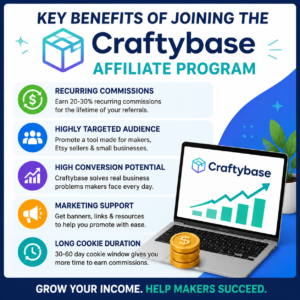
Second, the recurring commission model ensures long-term passive income.
Third, the product has strong retention because inventory management tools become essential once integrated into a business workflow.
Finally, affiliates benefit from a niche market with less competition compared to mainstream SaaS tools like email marketing platforms or hosting services.
Overview of the Craftybase Affiliate Program
The Craftybase affiliate program allows individuals to earn commissions by referring paying customers to the platform. Once approved, affiliates receive a unique referral link that tracks clicks, signups, and conversions.
The program is typically managed through a third-party affiliate tracking system, making it easy to monitor performance in real time. Affiliates can promote Craftybase through blogs, YouTube videos, tutorials, or social media content.
What makes this program appealing is its recurring commission model. Instead of earning a one-time payment, affiliates often earn commissions as long as the referred customer remains subscribed. This creates a long-term passive income stream rather than a short-term payout system.
Why Craftybase Converts Better Than Generic SaaS Tools
One reason the Craftybase Affiliate Program performs well is because it targets a very specific audience. Unlike general tools like CRMs or email marketing software, Craftybase focuses only on handmade sellers and small manufacturers.
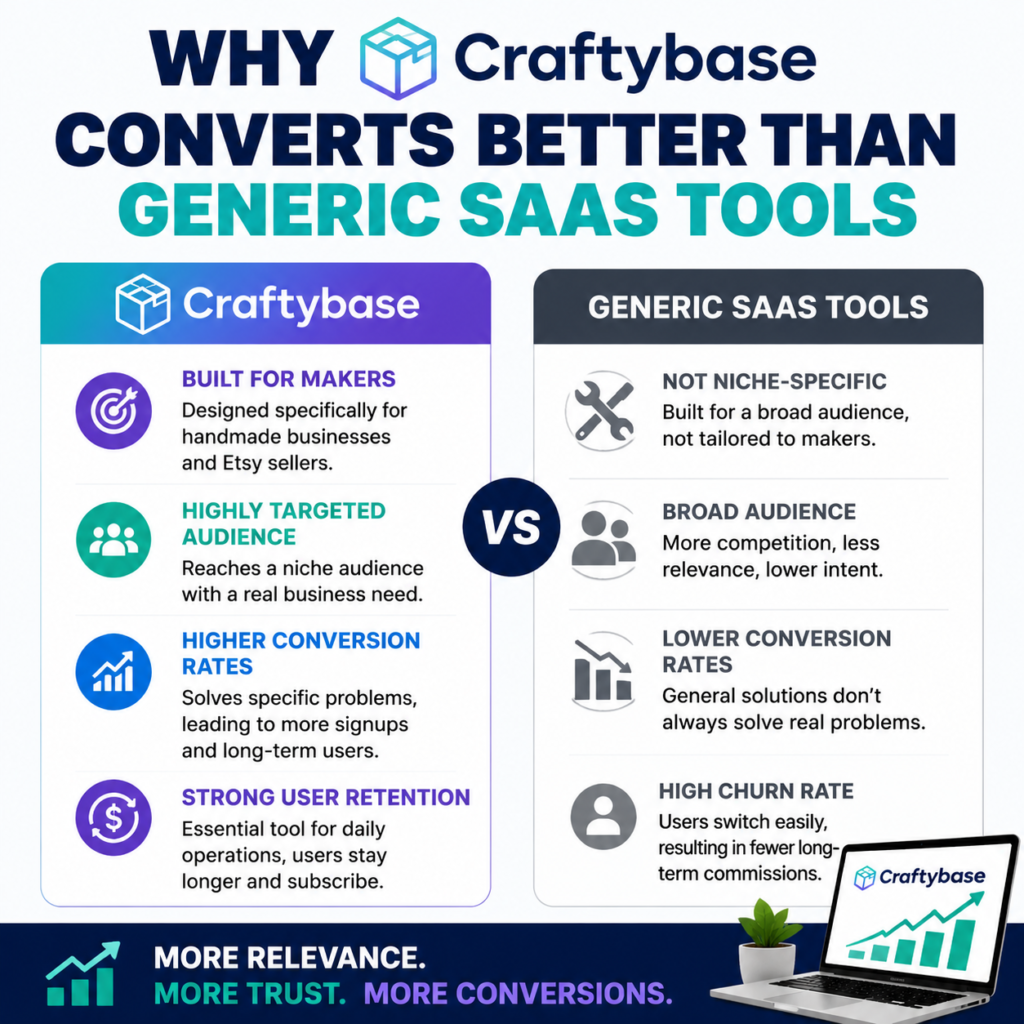
This niche focus increases conversion rates because the audience already has a clear need. They are not “browsing” for software—they are actively struggling with inventory, pricing, and product costing.
When users feel a product is made specifically for them, they are far more likely to subscribe. This emotional connection is a key factor in affiliate success.
Commission Rates Explained in Detail
One of the most important factors in any affiliate program is the commission structure. Craftybase offers a competitive rate compared to other SaaS tools in the creative business niche.
Typically, affiliates can expect:
Plan Type | Commission Type | Estimated Rate |
Monthly Subscription | Recurring | 20% – 30% |
Annual Subscription | Upfront or blended | Higher first payout |
Long-term users | Recurring lifetime | Ongoing income |
The real power of this model is not just the percentage but the recurring nature of payments. If a customer stays subscribed for 12 months, your earnings multiply significantly without additional effort.
This makes Craftybase especially attractive for content creators who build evergreen content like blog posts or YouTube tutorials.
Cookie Duration and Payout Structure
Cookie duration plays a huge role in affiliate success. It determines how long you get credit for a referral after someone clicks your link.
Craftybase generally provides a 30 to 60-day cookie window, which means if a user signs up within that period, you still get credited for the sale. This is fairly standard in SaaS affiliate programs and gives affiliates enough time to nurture leads.
Payouts are usually handled on a monthly basis, once you reach a minimum threshold. Payments are typically made via PayPal or bank transfer depending on your location.
This consistent payout cycle helps affiliates plan their income more effectively and reinvest in content creation strategies.
Eligibility and Requirements for Affiliates
Joining the Craftybase affiliate program is relatively straightforward, but approval is not automatic. The program typically looks for:
- A relevant website, blog, or audience
- Content related to handmade businesses, Etsy, or small business tools
- Basic understanding of affiliate marketing practices
- Compliance with ethical marketing guidelines
While beginners can apply, having an established content platform increases approval chances significantly. The goal is to ensure affiliates can drive targeted, high-quality traffic.
Step-by-Step Guide to Joining the Program
Becoming a Craftybase affiliate usually follows a simple process:
- Visit the Craftybase affiliate signup page
- Fill out your application form with website details
- Submit your application for review
- Wait for approval from the affiliate management team
- Access your dashboard and unique referral links
- Start promoting Craftybase content
Once approved, you can immediately begin using banners, links, and tracking tools provided in your dashboard.
Affiliate Dashboard and Tracking System
The affiliate dashboard is the control center for tracking performance. It typically includes:
- Click tracking
- Conversion tracking
- Revenue reports
- Commission summaries
- Payment history
This level of transparency helps affiliates optimize their campaigns. You can easily identify which blog posts or videos are performing best and double down on successful strategies.
Accurate tracking is one of the reasons SaaS affiliate programs like Craftybase are preferred over physical product affiliate systems.
Marketing Materials Provided to Affiliates
Craftybase supports its affiliates with a variety of promotional assets, including:
- Banner ads
- Text links
- Email templates
- Product screenshots
- Landing page suggestions
These materials reduce the workload for beginners and help experienced marketers scale faster. Instead of creating everything from scratch, affiliates can focus on content distribution and optimization.
Best Strategies to Promote Craftybase Effectively
To succeed with Craftybase, you need targeted marketing strategies. Broad promotions rarely work well in SaaS affiliate programs.
Effective methods include:
- Writing in-depth blog reviews
- Creating “how-to” tutorials for Etsy sellers
- Publishing comparison articles with competitor tools
- Building niche landing pages targeting keywords like “inventory software for Etsy”
The key is relevance. The more aligned your content is with handmade business owners, the higher your conversion rate will be.
SEO Content Strategy for Higher Affiliate Conversions
SEO is one of the most powerful tools for affiliate marketers promoting Craftybase. Ranking on Google allows you to generate consistent traffic without paid ads.
Focus on long-tail keywords such as:
- “best inventory software for handmade businesses”
- “how to track Etsy product costs”
- “Craftybase review for beginners”
High-ranking content should be detailed, problem-solving, and structured for readability. Google rewards content that fully answers user intent, especially in niche SaaS topics.
Social Media Marketing Strategies for Affiliates
Social platforms like Pinterest, Instagram, and YouTube are extremely effective for this niche. Handmade sellers are highly active in visual platforms, making them ideal for product discovery.
Some strategies include:
- Sharing short tutorials on inventory management
- Posting before-and-after business organization results
- Creating reels about Etsy selling tips
Visual storytelling works better than direct sales pitches in this niche.
Email Marketing Techniques That Work
Email marketing remains one of the highest converting affiliate channels. You can build an email list by offering free resources like:
- Etsy pricing calculators
- Inventory spreadsheets
- Business starter guides
Once users are on your list, you can nurture them with educational content before introducing Craftybase as a solution.
Common Mistakes to Avoid as a Craftybase Affiliate
Many affiliates fail because they treat Craftybase like a generic product. Some common mistakes include:
- Promoting without understanding the audience
- Using spammy advertising techniques
- Writing shallow or copied content
- Ignoring SEO fundamentals
Success requires patience, consistency, and value-driven content creation.
Earnings Potential Breakdown for Affiliates
Earnings depend heavily on traffic quality and content strategy. However, here is a rough idea:
- 10 conversions/month → steady side income
- 50 conversions/month → part-time income level
- 100+ conversions/month → full-time affiliate income
Because commissions are recurring, long-term earnings compound over time, making early growth especially valuable.
Who Should Join the Craftybase Affiliate Program
This program is ideal for:
- Bloggers in the small business niche
- Etsy educators and influencers
- YouTubers creating handmade business content
- Digital marketing professionals
- SaaS affiliate marketers looking for niche opportunities
If your audience includes product creators or online sellers, this program is a strong fit.
Conclusion
The Craftybase affiliate program offers a strong opportunity for anyone targeting handmade business owners and Etsy sellers. Its recurring commission structure, niche audience, and high retention rates make it a stable long-term income stream. Success depends on strategic content creation, SEO optimization, and understanding the pain points of small product businesses.
Read Also:
What Makes Invisa Hotels (GLOBAL) Stand Out in the Hospitality Industry?
How StackSocial Helps Consumers Save Money on Software and Online Courses
Top Features That Make Qustodio a Trusted Digital Parenting Solution
How Sino Hotels Group Redefines Comfort and Hospitality Excellence
How to Promote Mobile Pixels Affiliate Program Successfully
Frequently asked questions
Yes, joining is free, but approval depends on your platform quality and niche relevance.
Affiliates typically earn 20%–30% recurring commissions depending on the referral plan.
A website is not mandatory but significantly increases approval chances.
Payments are usually processed monthly via PayPal or bank transfer after reaching the minimum threshold.
Yes, but success depends on consistent SEO content creation and niche-focused marketing.