
The internet has completely transformed the way we work, communicate, shop, learn, and entertain ourselves. Every day, billions of people share personal information online, from financial details and private conversations to browsing habits and location data. While the digital world offers endless opportunities, it also creates new privacy challenges. Cybercriminals, advertisers, data trackers, and malicious websites are constantly looking for ways to collect user information. This is where privacy tools like NordVPN become important for people who want more control over their online activities.
Table of Contents
ToggleA VPN, or Virtual Private Network, works like a secure tunnel between your device and the internet. Instead of allowing your internet traffic to travel openly, a VPN encrypts your connection and hides important details such as your IP address. NordVPN has become one of the widely recognized VPN services because of its combination of security features, speed, and user-friendly design. Independent reviews frequently highlight its audited no-logs approach, encryption technology, and additional security tools.
Whether you are working remotely, using public Wi-Fi, streaming content, shopping online, or simply browsing websites, protecting your digital identity has become more important than ever. In this article, we will explore the top benefits of using NordVPN for privacy and online protection, explain how its features work, and understand why many users choose VPN technology as part of their cybersecurity strategy.
Understanding Why Online Privacy Matters Today
The internet remembers almost everything. Every search you perform, website you visit, application you use, and service you subscribe to can create a digital footprint. Many users assume that their online activities are private because they are sitting behind a personal device, but the reality is more complicated. Internet service providers, websites, advertising networks, and cybercriminals may collect different types of information about online behavior.
Imagine your online activity as letters being transported through a busy city. Without protection, anyone along the route may be able to see where the letter came from and where it is going. A VPN works like a locked delivery box that hides the contents and protects the journey. This simple concept explains why encryption and privacy tools have become essential parts of modern internet usage.
Cybersecurity threats are also becoming more advanced. Phishing attacks, identity theft attempts, malware downloads, and fake websites are designed to trick users into revealing sensitive information. NordVPN has expanded beyond basic VPN functionality by offering additional security features designed to block threats such as malicious websites and trackers.
The Growing Need for Digital Security
Modern users connect to the internet from multiple locations and devices. A person may check emails from a coffee shop, access work documents from home, or complete financial transactions while traveling. Each connection creates potential security risks, especially when using networks that are not fully trusted.
Public Wi-Fi networks are a common example. Airports, hotels, restaurants, and shopping centers often provide convenient internet access, but these networks may not always offer strong protection. Attackers can sometimes attempt to intercept unprotected connections and steal valuable information.
How Personal Data Is Exposed Online
Many online services collect user data to personalize experiences, deliver advertisements, or analyze behavior. While some data collection is part of normal internet operations, users increasingly want transparency and control over what information is shared.
A VPN does not make someone completely invisible online, but it provides an additional privacy layer by encrypting traffic and masking the original IP address. This makes it harder for unwanted observers to connect online activity directly to a specific user.
What Is NordVPN and How Does It Work?
NordVPN is a virtual private network service designed to provide a more secure and private internet connection. Instead of connecting directly to websites through your regular internet connection, NordVPN routes your traffic through encrypted servers located around the world.
The process is similar to sending a package through a secure warehouse system. Your device sends information to a protected VPN server, and that server communicates with the internet on your behalf. Websites see the VPN server’s information instead of your original connection details.
NordVPN uses modern encryption methods and security protocols to protect user traffic. Its NordLynx protocol, based on WireGuard technology, is designed to provide strong security while maintaining high connection speeds.
Basic Function of a VPN Service
A VPN performs several important tasks:
- Encrypts internet traffic
- Hides the user’s original IP address
- Creates a secure connection between device and server
- Helps protect information on unsecured networks
These functions make VPN services useful for privacy-conscious users, remote workers, travelers, and anyone who wants an additional security layer.
How NordVPN Creates a Secure Internet Connection
When you connect to NordVPN, your device establishes an encrypted connection with a VPN server. Your internet requests travel through this protected connection before reaching their destination.
This process helps prevent unauthorized parties from easily viewing your browsing activity. The encryption acts as a protective shield, reducing the chances of data exposure during online communication.
Benefit 1: Strong Encryption for Protecting Online Data
One of the biggest advantages of using NordVPN is its encryption technology. Encryption converts readable information into a coded format that unauthorized people cannot easily understand.
When you send messages, enter passwords, or complete online transactions, your data travels through multiple networks before reaching the destination. Without encryption, sensitive information may be vulnerable during transmission.
NordVPN uses advanced encryption standards designed to protect user connections. Security reviews commonly mention features such as AES-256 encryption and modern VPN protocols as important parts of its privacy architecture.
Strong encryption is especially valuable when handling sensitive activities such as:
- Online banking
- Business communication
- Cloud storage access
- Private messaging
- Work-related data transfers
Benefit 2: Strict No-Logs Policy for Better Privacy
A VPN’s privacy reputation depends heavily on how it handles user information. A provider that stores detailed browsing records could create privacy concerns.
NordVPN promotes a strict no-logs policy, meaning it states that it does not store user browsing activity or connection information that could identify individual users. The company has undergone independent assessments to verify aspects of this policy.
A no-logs approach gives users greater confidence because their VPN provider is designed not to maintain a detailed history of their online behavior.
Independent Audits and Privacy Verification
Independent audits provide an additional layer of transparency. Instead of relying only on company statements, external organizations can review systems and policies.
Recent reports have highlighted repeated independent verification efforts related to NordVPN’s privacy claims.
This type of transparency is important because privacy is not only about technology; it is also about trust.
Benefit 3: Protection Against Hackers and Cyber Threats
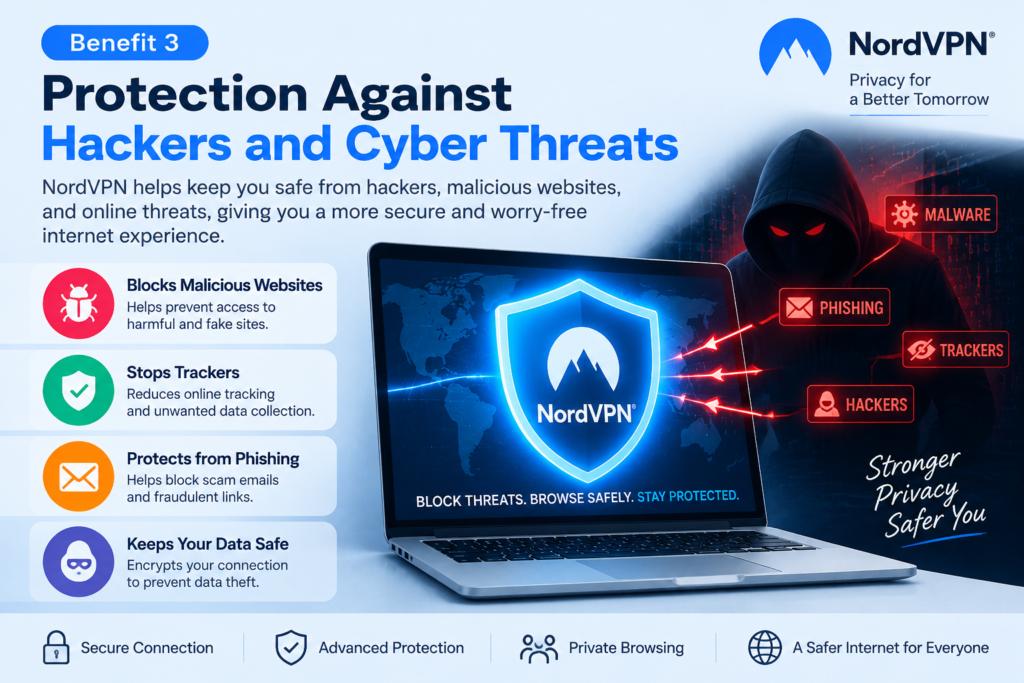
Online threats continue to evolve. Hackers use various methods to target users, including fake websites, malicious downloads, and phishing attempts.
NordVPN includes security features such as Threat Protection, which is designed to help block malicious websites, trackers, and harmful files.
While a VPN should not replace complete cybersecurity practices like strong passwords and updated software, it can become an important part of a broader protection strategy.
Benefit 4: Secure Browsing on Public Wi-Fi Networks
Public Wi-Fi is convenient but can create security concerns. Many people connect automatically without considering who else may be using the same network.
Using NordVPN on public networks helps encrypt your connection, reducing the risk of outsiders monitoring your online traffic.
For travelers, students, and remote professionals, this protection can provide additional confidence when accessing important accounts away from home.
Benefit 5: Anonymous Browsing and IP Address Protection
Your IP address can reveal information about your internet connection and approximate location. NordVPN allows users to connect through VPN servers, making websites see the VPN server’s IP address instead of the user’s original one.
This improves online privacy by reducing direct exposure of personal connection details.
However, users should understand that VPNs provide privacy protection, not complete anonymity. Other factors such as browser settings, account logins, and online behavior can still affect privacy.
Benefit 6: Faster and More Reliable VPN Performance
Some people avoid VPNs because they believe VPN connections always reduce internet speed. Modern VPN technology has improved significantly.
NordVPN’s NordLynx protocol focuses on balancing security and performance. Many reviewers highlight its ability to maintain strong speeds while providing encryption protection.
A good VPN should feel almost invisible during everyday activities such as browsing, video calls, and streaming.
Benefit 7: Safe Streaming and Global Internet Access
Many users choose VPN services because they want more flexibility when accessing online content while traveling.
NordVPN provides access to servers in multiple locations, allowing users to connect through different regions. This can help travelers maintain access to familiar services when abroad.
Streaming availability depends on platform rules and regional restrictions, but VPN technology can provide more control over how users connect to the internet.
Benefit 8: Multi-Device Security for Modern Users
Today, people rarely use only one device. A single person may have a smartphone, laptop, tablet, and smart TV connected to the internet.
NordVPN supports multiple platforms, including Windows, macOS, Android, iOS, and other systems.
This makes it easier for households and professionals to maintain consistent privacy protection across different devices.
Benefit 9: Advanced Privacy Features Beyond Traditional VPNs
NordVPN offers additional privacy-focused features beyond basic VPN connections. These include tools designed for stronger protection, such as:
- Double VPN routing
- Kill switch protection
- Threat blocking features
- Secure private networking options
These tools give users more control over their online security settings.
Benefit 10: Easy-to-Use Apps for Beginners and Professionals
A major advantage of NordVPN is its simple interface. Many cybersecurity tools can feel complicated, but VPN apps are designed to make protection accessible.
Users can usually connect to a secure server with just a few clicks. Advanced users can explore additional settings, while beginners can rely on automatic protection features.
NordVPN vs Traditional Online Security Methods
Feature | Traditional Security | NordVPN |
Data encryption | Limited | Encrypted VPN tunnel |
IP protection | No | Yes |
Public Wi-Fi protection | Limited | Stronger protection |
Location privacy | Limited | Improved |
Threat blocking | Depends on other tools | Available features |
A VPN does not replace antivirus software, password managers, or safe browsing habits. Instead, it complements these tools by adding another security layer.
Who Should Use NordVPN for Online Protection?
NordVPN can be useful for many types of users:
- Remote workers handling business information
- Travelers using public networks
- Students accessing online resources
- Privacy-conscious internet users
- People who want additional protection against tracking
The value depends on personal needs, internet habits, and privacy preferences.
Things to Consider Before Choosing NordVPN
Before subscribing to any VPN service, users should consider:
- Required features
- Number of devices
- Subscription cost
- Speed expectations
- Privacy requirements
A VPN is a personal security choice, and different users may need different levels of protection.
Final Thoughts on NordVPN Privacy Protection
NordVPN has become a popular choice for users looking for stronger online privacy and security. Its combination of encryption, no-logs practices, threat protection tools, and performance-focused technology makes it a comprehensive VPN solution.
As online threats continue growing, protecting personal information is becoming a normal part of digital life. A VPN cannot solve every cybersecurity problem, but it can provide an important layer of defense for everyday internet activities.
Conclusion
Using NordVPN for privacy and online protection can help users create a safer and more private internet experience. From encrypted connections and IP protection to threat-blocking features and secure public Wi-Fi usage, NordVPN provides multiple tools designed for modern online challenges.
The internet is constantly changing, and privacy risks are becoming more complex. Building good security habits, using strong passwords, keeping software updated, and adding privacy tools like VPN services can help users maintain better control over their digital lives.
Read Also:
A Complete Guide to Using Otter.ai for Smarter Meeting Transcription
A Beginner’s Guide to Learning English Online with Novakid TR
What Parents Should Know Before Choosing Novakid Global ARABIC for Kids
Top Reasons Small Businesses Are Considering MightyCall
The Ultimate Guide to Finding the Right Loop Earplugs
How Lenovo Argentina Helps Businesses Choose Better Technology
Frequently asked questions
Yes, NordVPN is designed with security features such as encryption, privacy-focused policies, and security protocols that help protect user connections. Independent reviews have examined its privacy and security features.
Yes, when connected to a NordVPN server, websites typically see the VPN server’s IP address instead of your original IP address.
NordVPN can encrypt your internet connection, helping provide additional protection when using public Wi-Fi networks.
NordVPN states that it follows a no-logs policy, meaning it does not store users’ browsing activity. Independent audits have reviewed these privacy claims.
For users who value online privacy, secure connections, and additional cybersecurity features, NordVPN offers a range of tools that may fit their needs. The right choice depends on individual requirements and preferences.