
This blog post explains how Woodpecker helps agencies scale cold email outreach successfully by improving deliverability, automating email sequences, and simplifying multi-client management. It highlights how agencies can use Woodpecker’s advanced features like personalization, automation workflows, and CRM integrations to run efficient and high-performing outreach campaigns. The article also covers practical strategies for scaling cold email efforts while maintaining strong inbox placement and consistent lead generation results.
Table of Contents
ToggleIntroduction to Woodpecker for Agencies
Cold email outreach has quietly become one of the most powerful client acquisition channels for modern B2B agencies. But here’s the catch—scaling it is where most teams hit a wall. It can be like riding a bicycle while juggling flaming torches when managing several clients, maintaining deliverability, and maintaining personalization at volume. This is exactly where Woodpecker steps in as a purpose-built solution for agencies that want to scale without breaking their outreach system.
Woodpecker is not just another email automation tool; it is a full cold outreach ecosystem designed for deliverability, automation, and agency-level management. Agencies use it to run multi-client campaigns, monitor inbox health, and ensure emails actually land in prospects’ inboxes instead of spam folders. According to Woodpecker’s official feature data, it includes free email verification, inbox rotation, warm-up systems, and adaptive sending, all of which directly influence deliverability performance and campaign success.
At its core, Woodpecker solves one critical agency problem: scaling outreach without scaling chaos. Instead of switching between spreadsheets, email tools, and CRM dashboards, agencies can centralize everything in one place. But to understand why this matters, we first need to understand the real challenges agencies face when scaling cold email.
Why Cold Email Scaling Is Challenging for Agencies
Scaling cold email outreach is not as simple as sending more emails. In fact, sending more without structure is often the fastest way to destroy domain reputation and reduce campaign effectiveness. Agencies usually manage multiple clients, each with different target audiences, offers, and email domains. That complexity creates operational friction at every level.
One of the biggest challenges is deliverability management. Modern email providers like Google and Microsoft have strict filtering systems. If engagement drops or bounce rates increase, entire domains can get flagged. This implies that authorities cannot just “turn up volume” without running the risk of long-term harm. Even small mistakes in authentication settings like SPF, DKIM, and DMARC can result in emails landing in spam or being blocked entirely.
Another major challenge is operational overload. Warming up inboxes, cleaning lists, verifying domains, and debugging bounce issues are just a few of the infrastructure activities that agencies frequently dedicate hours to each week. Reddit discussions among agency operators frequently highlight that cold email operations can consume up to 15–20 hours per week per team, just maintaining systems rather than improving strategy.
Finally, there’s the issue of multi-client complexity. Each client requires separate tracking, separate reporting, and often separate sending infrastructure. Without centralized tools, agencies end up building fragmented systems that are hard to scale and even harder to optimize.
Core Features of Woodpecker That Enable Scaling
Woodpecker stands out because it is designed specifically to reduce this operational chaos. Instead of focusing only on sending emails, it builds an ecosystem around deliverability, automation, and agency workflow management.
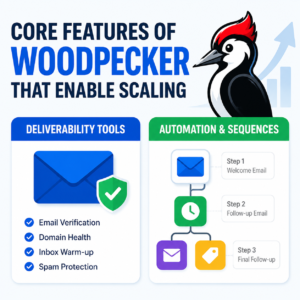
Deliverability Tools
The foundation of cold email success is deliverability. Woodpecker integrates multiple deliverability safeguards such as:
- Email verification before sending
- Domain health monitoring
- Spam word detection
- Inbox rotation
- Adaptive sending limits
These features help agencies maintain sender reputation across multiple campaigns and clients. The platform’s built-in verification system reduces bounce rates and improves inbox placement consistency, which is critical when scaling outreach volume.
Automation & Sequences
Woodpecker also supports advanced automation workflows that allow agencies to build complex outreach sequences. Instead of manually following up with leads, agencies can design conditional campaigns where email behavior triggers next steps automatically.
For example, if a prospect replies positively, they can be moved into a booking sequence. If they don’t respond, they enter a follow-up cycle with personalized messaging variations. This reduces manual workload significantly while maintaining engagement consistency.
Agency Panel and Multi-Client Management
One of the most powerful aspects of Woodpecker for agencies is the Agency Panel. This feature allows teams to manage multiple clients from a single dashboard without mixing data or campaigns.
Each client can have:
- Separate inboxes
- Separate campaigns
- Independent analytics
- Isolated prospect databases
This structure is critical for scaling because it eliminates the confusion that comes from handling multiple outreach systems manually. Agencies can also assign team members to specific clients while maintaining centralized control.
The agency model also supports white-label reporting, allowing agencies to present performance data under their own branding. This improves client trust and makes reporting more professional without additional tools.
Deliverability Optimization in Woodpecker
Deliverability is not just a feature in Woodpecker—it is the foundation of the entire system. The platform includes multiple mechanisms that ensure emails consistently land in primary inboxes.
One of the key methods is adaptive sending, which automatically adjusts sending speed based on engagement signals. If engagement drops or bounce rates rise, Woodpecker slows down sending to protect domain health.
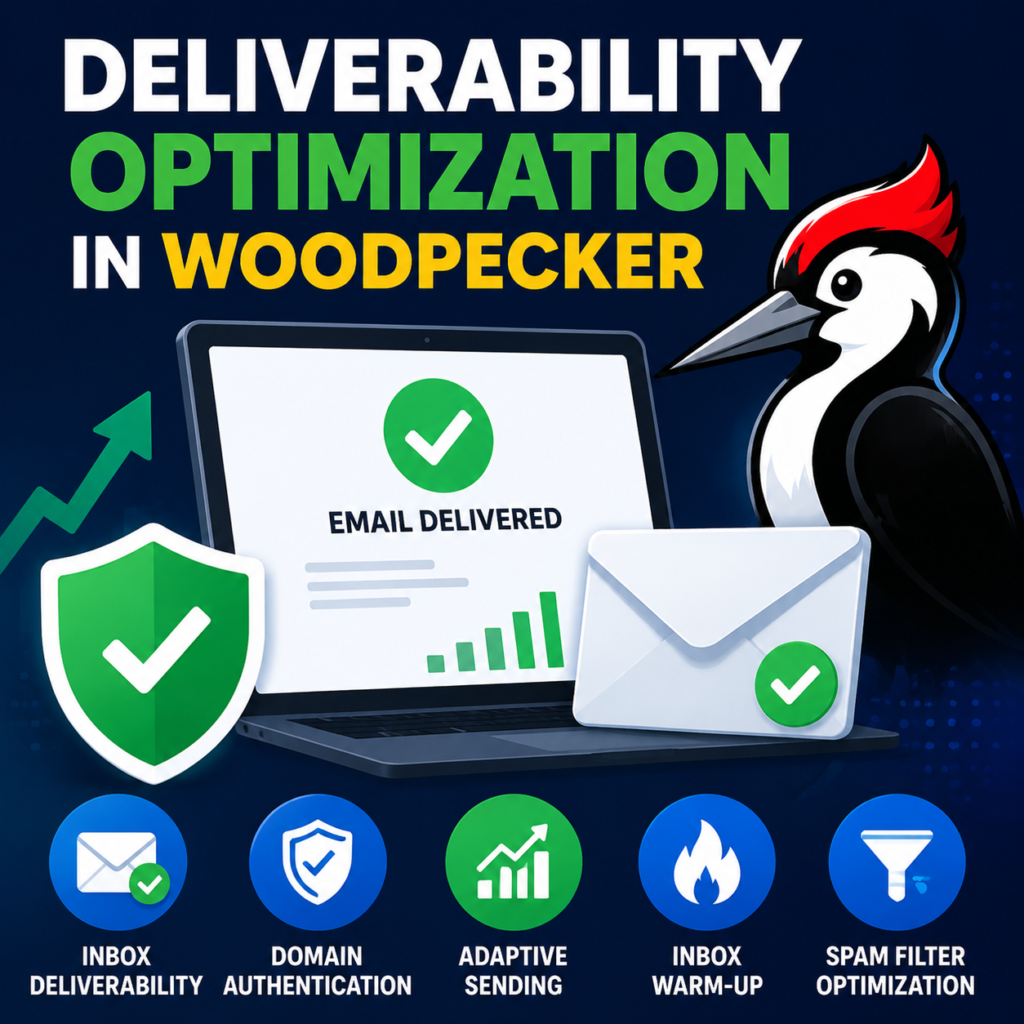
It also includes free warm-up tools, which gradually increase email sending volume to build trust with mailbox providers. This is essential for new domains or newly added client inboxes.
Another critical feature is domain audit functionality, which checks SPF, DKIM, and DMARC configurations before campaigns go live. This prevents technical misconfigurations that could silently destroy deliverability.
In modern cold email ecosystems, deliverability is no longer optional—it is the difference between scaling profitably and burning through domains.
Automation Workflows for Cold Email Campaigns
Automation is where Woodpecker truly helps agencies scale beyond manual limitations. Instead of treating each campaign as a standalone task, agencies can build reusable workflows.
These workflows include:
- Multi-step email sequences
- Conditional follow-ups based on replies
- A/B testing for subject lines and content
- Automatic suppression of uninterested leads
- Integration with CRM systems
This allows agencies to treat cold email as a system, not a campaign. Once a workflow is built, it can be replicated across multiple clients with minor adjustments, dramatically reducing setup time.
Automation also ensures consistency. Every prospect receives the right message at the right time without relying on manual execution.
Scaling Cold Email Outreach Strategies
Scaling outreach is not about sending more emails—it is about sending smarter emails across a larger infrastructure. Woodpecker supports this philosophy through controlled scaling mechanisms.
Agencies typically scale using:
- Multiple domains
- Multiple inboxes per domain
- Controlled daily sending limits
- Segmented campaigns per client
The idea is simple: instead of pushing one inbox to its limit, distribute volume across multiple controlled sending identities. This reduces risk and improves overall deliverability.
Woodpecker’s inbox rotation and adaptive sending features support this strategy by automatically distributing email load across connected accounts.
Personalization at Scale
One of the biggest myths in cold email is that personalization becomes impossible at scale. Woodpecker challenges this assumption through dynamic personalization tools.
Agencies can use:
- Dynamic custom fields
- Spintax variations
- AI-assisted email writing
- Timezone-based sending
This allows each email to feel individually crafted even when thousands are being sent. Personalization is no longer manual—it is system-driven.
The key is not writing unique emails for every prospect, but building modular personalization systems that adapt automatically.
Integrations with CRM and Marketing Tools
Woodpecker integrates with popular tools like HubSpot, Pipedrive, and Zapier, enabling seamless workflow synchronization.
This integration allows agencies to:
- Sync leads automatically into CRMs
- Track conversions from email to deal stage
- Trigger workflows across marketing stacks
- Centralize reporting across tools
With integration capabilities, Woodpecker becomes part of a larger sales ecosystem rather than a standalone tool.
Real-World Agency Use Cases
Agencies use Woodpecker in various ways depending on their business model. Some focus on lead generation for SaaS companies, while others run outbound campaigns for service-based businesses.
A key real-world insight is that agencies using structured cold email systems often report significantly higher appointment generation efficiency. One agency case highlighted by Woodpecker claims over 1,000 monthly appointments using structured outreach systems powered by the platform.
This demonstrates that scalability is not theoretical—it is already being achieved when systems are properly implemented.
Pricing Structure and Cost Efficiency
Woodpecker offers a flexible pricing model based on contacted prospects, email volume, and agency scale requirements. Pricing is designed to scale alongside usage rather than forcing rigid subscription tiers.
Key cost components include:
- Contacted prospects pricing model
- Add-ons for integrations and agency panels
- Optional warm-up and infrastructure upgrades
For agencies, this structure is important because costs align directly with client workload. Instead of overpaying for unused capacity, agencies scale costs dynamically based on activity.
Performance Metrics and Campaign Tracking
Tracking performance is critical for scaling outreach successfully. Woodpecker provides detailed analytics that help agencies monitor:
- Open rates
- Reply rates
- Bounce rates
- Conversion rates
- Deliverability performance
These metrics help agencies identify what is working and what is breaking. Without data visibility, scaling becomes guesswork. With it, agencies can continuously refine campaigns and improve ROI.
Common Mistakes Agencies Make in Cold Email
Many agencies struggle not because of the tool, but because of how they use it. Common mistakes include:
- Sending too many emails too quickly
- Ignoring domain warm-up processes
- Using poor-quality lead lists
- Over-personalizing manually at scale
- Not monitoring deliverability metrics
One recurring insight from agency operators is that deliverability matters more than copywriting in modern cold email ecosystems. Even great messaging fails if it never reaches the inbox.
Best Practices for Scaling Outreach Successfully
Successful agencies follow a few core principles when using Woodpecker:
- Start slow and scale gradually
- Maintain strict domain hygiene
- Segment campaigns by client and niche
- Focus on list quality over volume
- Use automation instead of manual follow-ups
The most successful agencies treat cold email like an infrastructure system, not a marketing experiment. Woodpecker supports this mindset by centralizing all critical components in one platform.
Alternatives to Woodpecker for Agencies
While Woodpecker is widely used, agencies sometimes compare it with other platforms like Lemlist, Smartlead, or Instantly.
Each tool has strengths:
- Some focus more on AI personalization
- Others prioritize higher sending volume
- Some specialize in visual email campaigns
However, Woodpecker’s advantage lies in its agency-focused structure, deliverability controls, and multi-client management system, which makes it particularly suitable for structured scaling.
Conclusion
Scaling cold email outreach is not about sending more emails—it is about building a stable, repeatable system that can handle complexity across multiple clients. Woodpecker helps agencies achieve this by combining deliverability protection, automation workflows, and centralized client management in one ecosystem.
Instead of juggling tools and fighting deliverability fires, agencies can focus on what actually drives revenue—building offers, improving targeting, and closing deals. That shift from manual execution to system-driven outreach is what makes scaling possible in the first place.
Read Also:
Coohom Commission Program for Beginners: Step-by-Step Success Guide
Top Benefits of the Easyship Ambassador Program for Influencers and Marketers
What Is Educative? A Complete Guide for Developers and Tech Learners
How StackSocial Helps Consumers Save Money on Software and Online Courses
Top Features That Make Qustodio a Trusted Digital Parenting Solution
Frequently asked questions
Yes, it is specifically designed to help agencies manage multiple clients, automate outreach, and maintain deliverability at scale.
Yes, it includes warm-up tools, inbox rotation, domain audits, and adaptive sending to protect sender reputation.
Yes, the Agency Panel allows you to manage separate clients, campaigns, and reporting dashboards.
Yes, but it is more powerful for structured teams or agencies that need scalable outreach systems.
Its focus on deliverability, agency workflows, and centralized multi-client management sets it apart from many competitors.